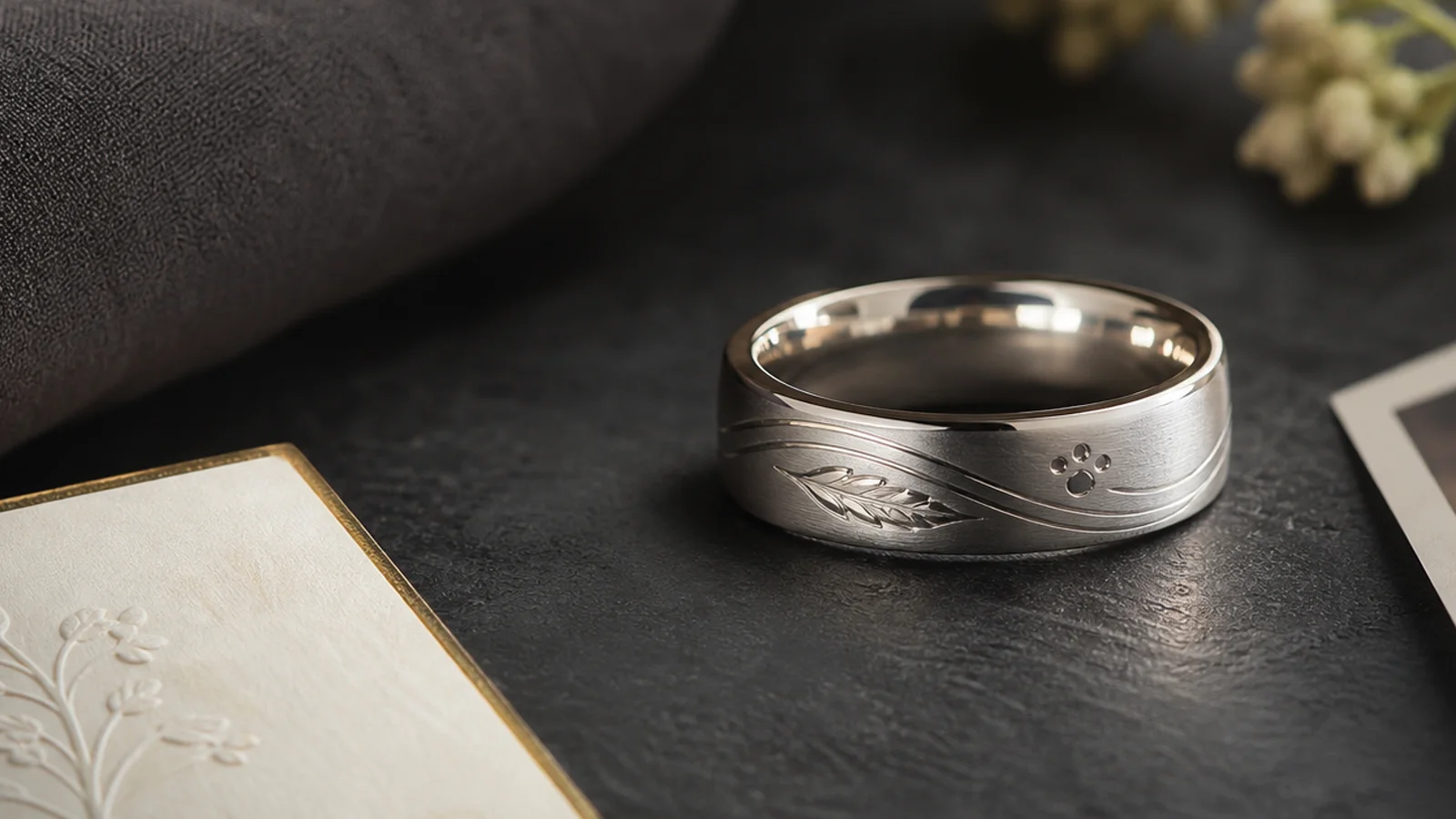

Ash-holding rings are not the only way to wear a memorial, and for many families they are not the right way. Ashes may already be scattered or interred, divided among relatives, or held whole because dividing them feels wrong. None of that should keep a memorial ring out of reach.
The alternative is a ring built from what the person left behind rather than their remains: a fingerprint, their handwriting, a photo reduced to a clean silhouette, a name and date, or a symbol from their life.
A fingerprint is the closest physical stand-in for presence. Funeral homes frequently keep print records even when families did not request them at the time; it is worth asking, even years later.
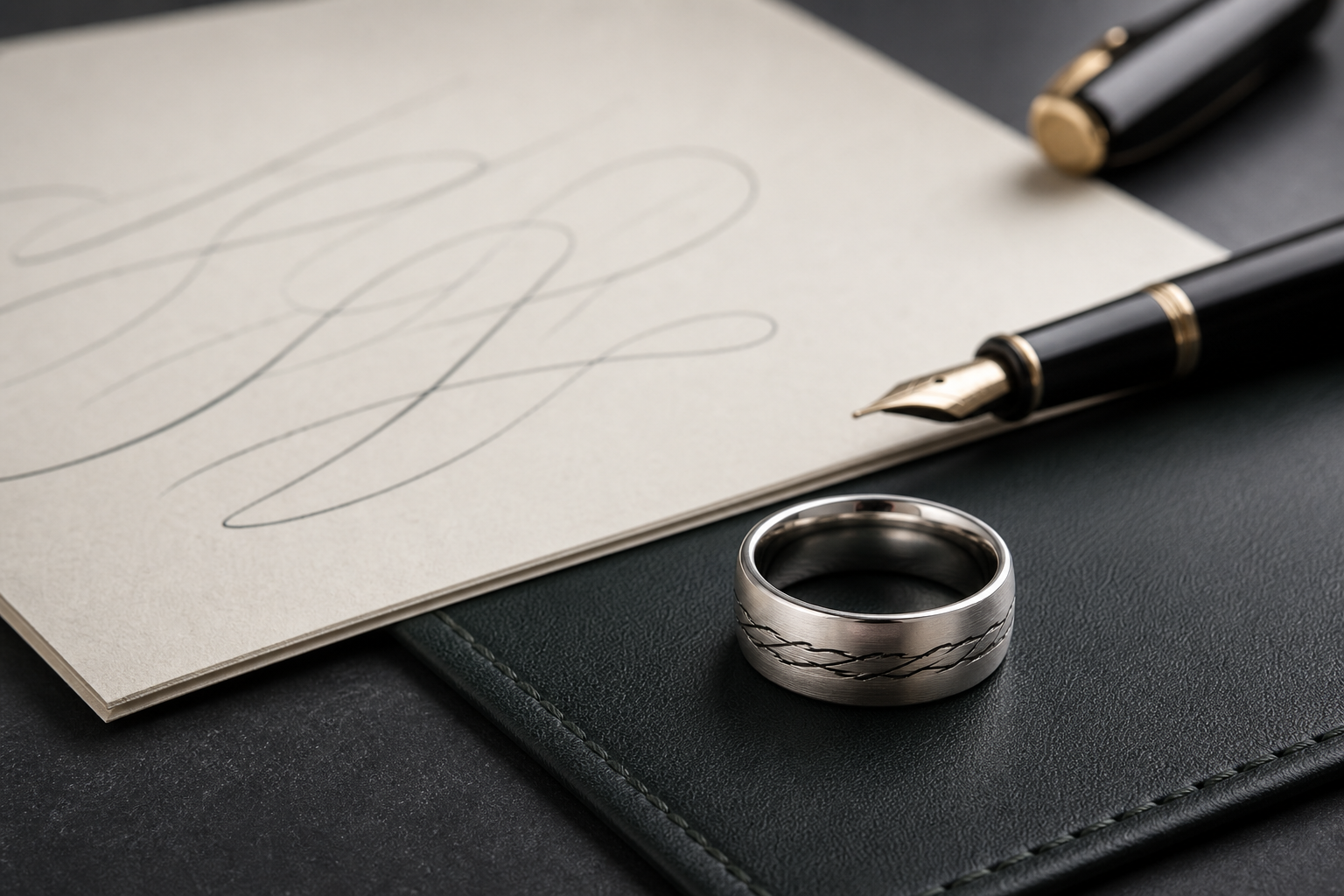
Handwriting is the most personal alternative when it exists. A signature, "love you," or a single word from a card or letter, engraved in their actual strokes, is repeatedly the choice families say they would make again.
A photo can become a silhouette: a profile, a person and their dog, a motorcycle, a house. Simplified to clean linework, it stays recognizable at ring scale in a way a detailed portrait cannot.
Names, dates, and coordinates carry structure when no physical source exists. The place you scattered the ashes, the family lake, or the home address can become coordinates that hold the location without explanation.
Unlike ash-filled rings, an engraved memorial has no chamber to seal, no resin to age, and nothing to lose if the ring is ever damaged, resized, or remade. The source file remains yours, and the design can be reproduced or adapted for other family members.
That also makes this path easier to share. Five siblings can each carry the same signature or print in five different band styles, which no single portion of ashes can do.
Choose one source detail to lead, keep the wording short, and let the finish stay quiet. The goal is a ring that comforts on ordinary days, not a display piece.
When the source detail is chosen, bring the print, handwriting, or photo file with the name and dates into the Friends of Irony designer and build the first version.