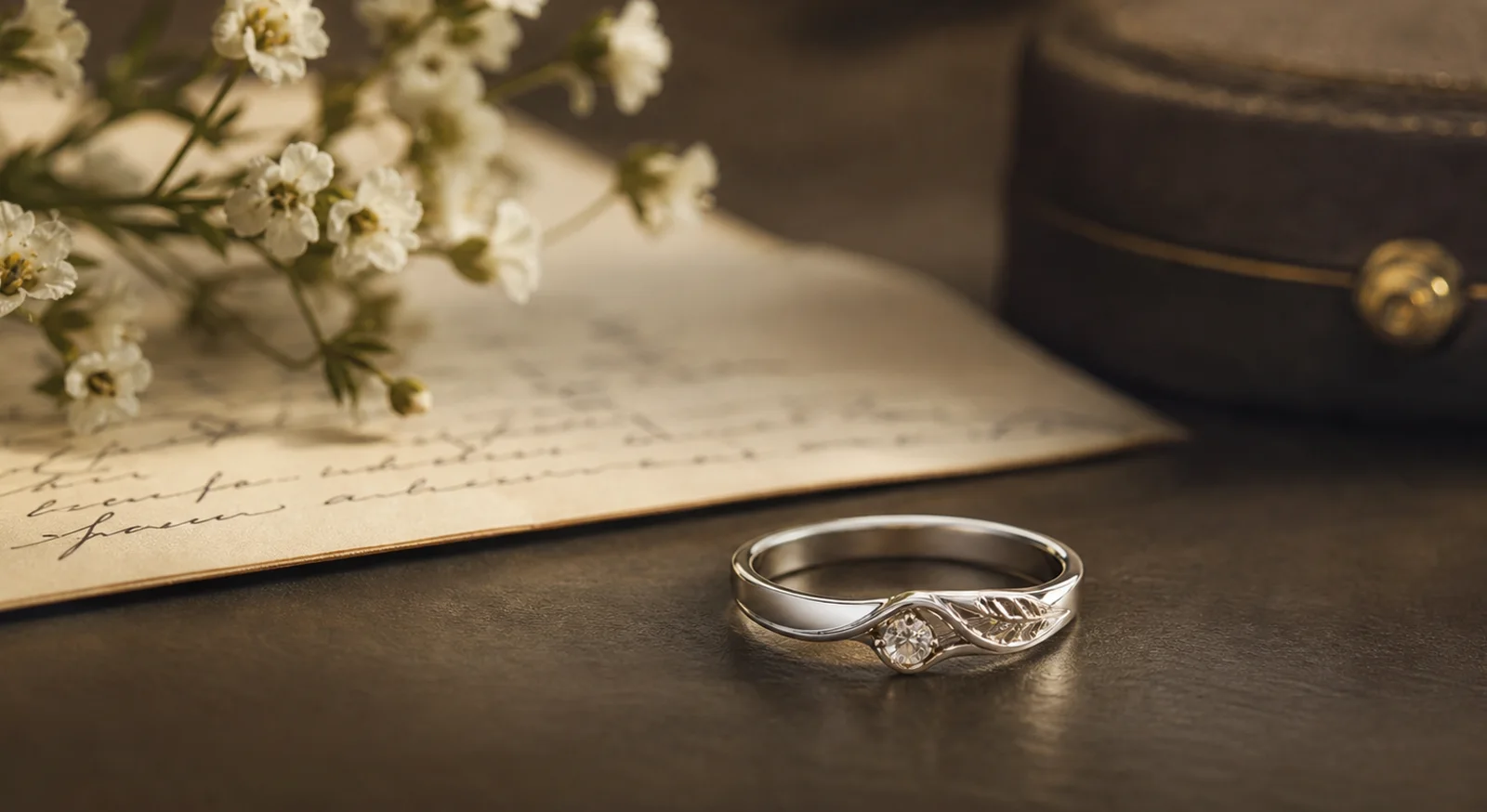

Grief for a daughter often comes through ordinary language: a nickname, one line in a school note, a drawing, or a phrase that appears in family messages. Those fragments are usually more durable than large poetic lines.
Choose one anchor before choosing metal or band width. A design built around a strong anchor reads clearly and stays meaningful on a first and a second look.
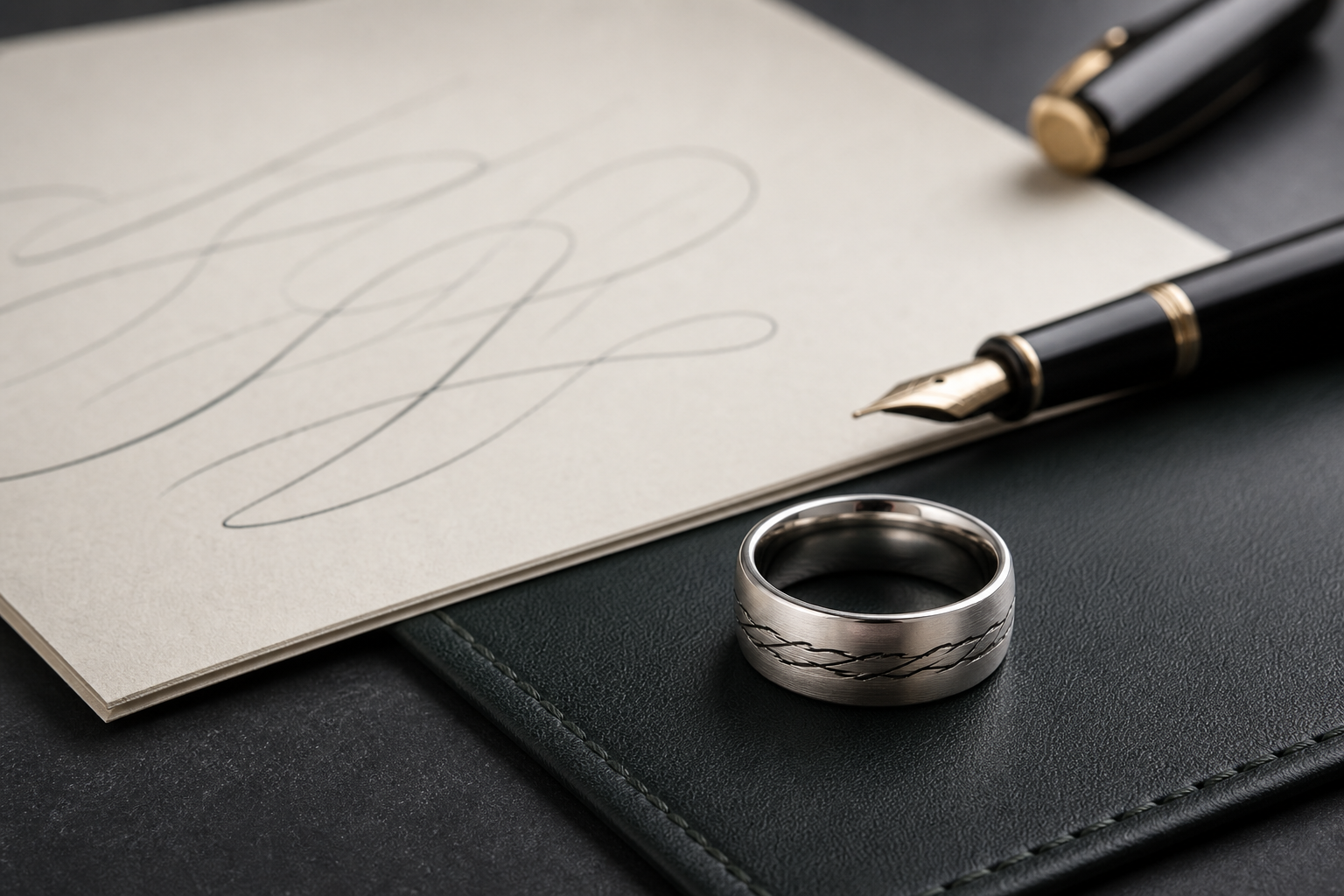
If you have handwriting, even if only short, the ring can stay private and still be deeply specific. Ask someone who has the best original source file; photographs of the source are more reliable than screenshots.
If no handwriting exists, a favorite flower, a bracelet charm, an adopted name, a birthday month, or a simple date can create the same emotional hold when handled with restraint.
Daughter memorial rings work best with moderate depth of engraving. Very dense lines lose clarity during normal use, especially if the wearer goes through daily tasks.
Decide whether the ring will be worn constantly or for certain times. If constant use is expected, simplify outward-facing details and move more personal writing inside.
Avoid using family shorthand that no one else used; if it does not sound natural in your family, it often looks forced on metal.
Some families want bright visible markers. If that is this case, use one symbol outside and reserve the internal text for her name and dates.
If a sibling is purchasing, the wearer still owns the final design. That usually means fewer symbols, easier readability, and one deliberate phrase.
Move to the first draft quickly once the core is chosen, then use the designer to trim, not expand.