

When a family is grieving a son, the first design temptation is to compress the whole life into one ring. A single ring usually works better when it carries one source detail and one date frame.
The source detail can be a nickname, signature, school name, team initial, or a short phrase he repeated at home. Keep all other elements secondary, because a ring designed in loss should still be wearable before it is emotional.
If he shared a faith, a service record, or a meaningful quote, that can sit as one small detail. Anything more than one central memory sign starts to feel like a memorial plaque instead of a ring.
For sons who are memorialized by age rather than a specific artifact, dates still need discipline. If the life timeline matters, use the two dates you are willing to revisit daily: name and years.
Font, spacing, and finish become more important than symbolism complexity here. Sons of different ages respond to different language, but the ring is never safer because the detail count is high; it is safer because the detail is specific.
If siblings are making choices, avoid one family member dictating the phrase from memory alone. Ask who lives with the design intent, and let that person choose what appears on outside versus inside.
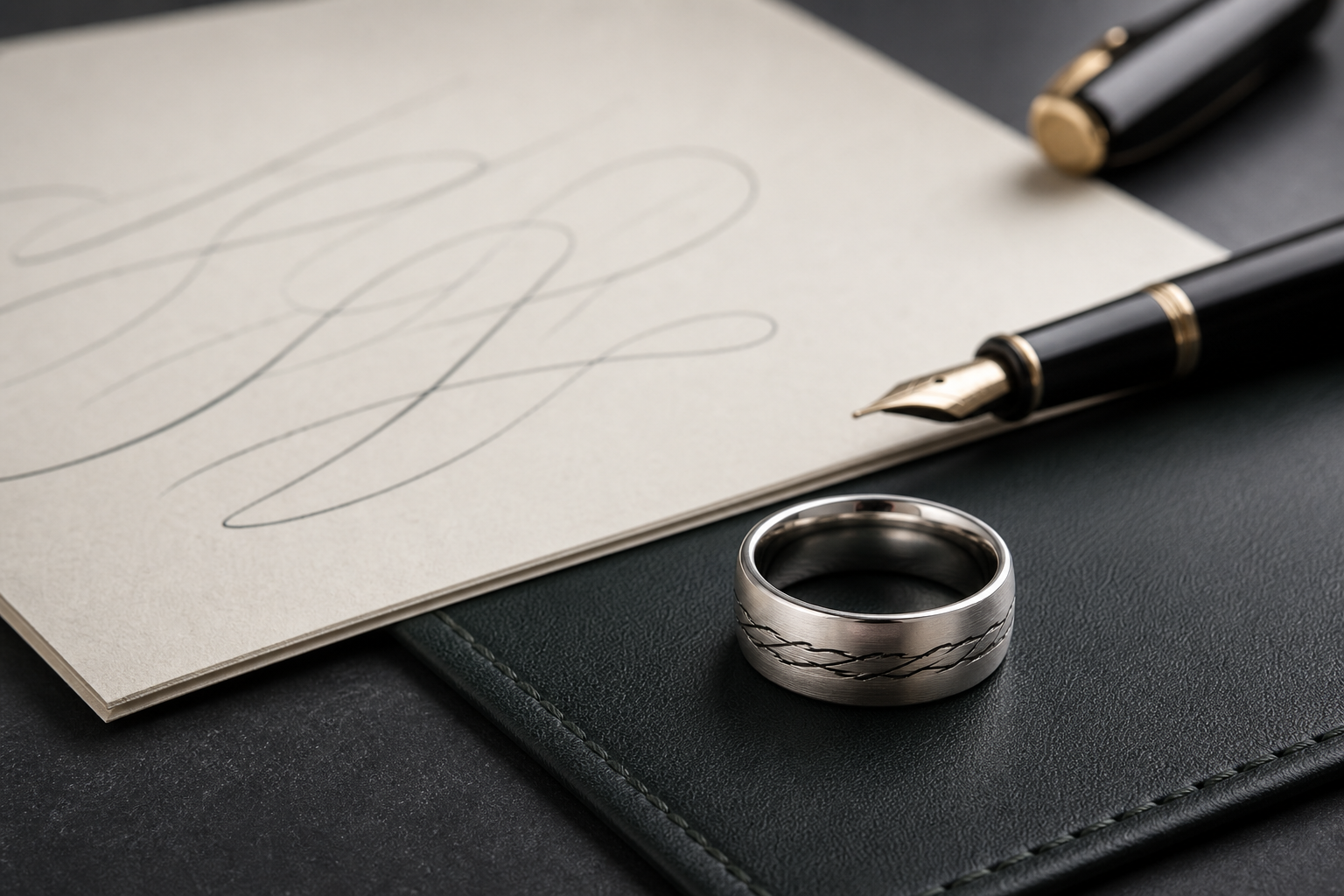
Handwriting is a strong anchor when available. A short sentence from a card, a signature, or even one nickname word can outperform a perfectly crafted new phrase.
No family image is required, but one clear, high-quality source file makes the first draft much better. If there is only one file, start with it and plan the rest as second-step options.
Choose whether the ring should be visible in the workplace, at workouts, or during ordinary errands. That practical question changes width, finish, and whether the wording belongs outside or inside.
When the source, wording, and finish are settled, open the Friends of Irony designer with the name, one chosen source, and the one phrase that still feels like him.