
A military memorial ring stands apart from other tribute jewelry because the service itself carries a shared language. Branch marks, rank insignia, and unit mottos do real emotional work without explanation, which most memorial symbols cannot do.
Start by choosing which layer of service to honor. The branch mark, Army, Navy, Air Force, Marine Corps, Coast Guard, Space Force, or National Guard, speaks broadly. A specific MOS, rate, or military occupational specialty symbol speaks to the people who knew what the work actually cost.
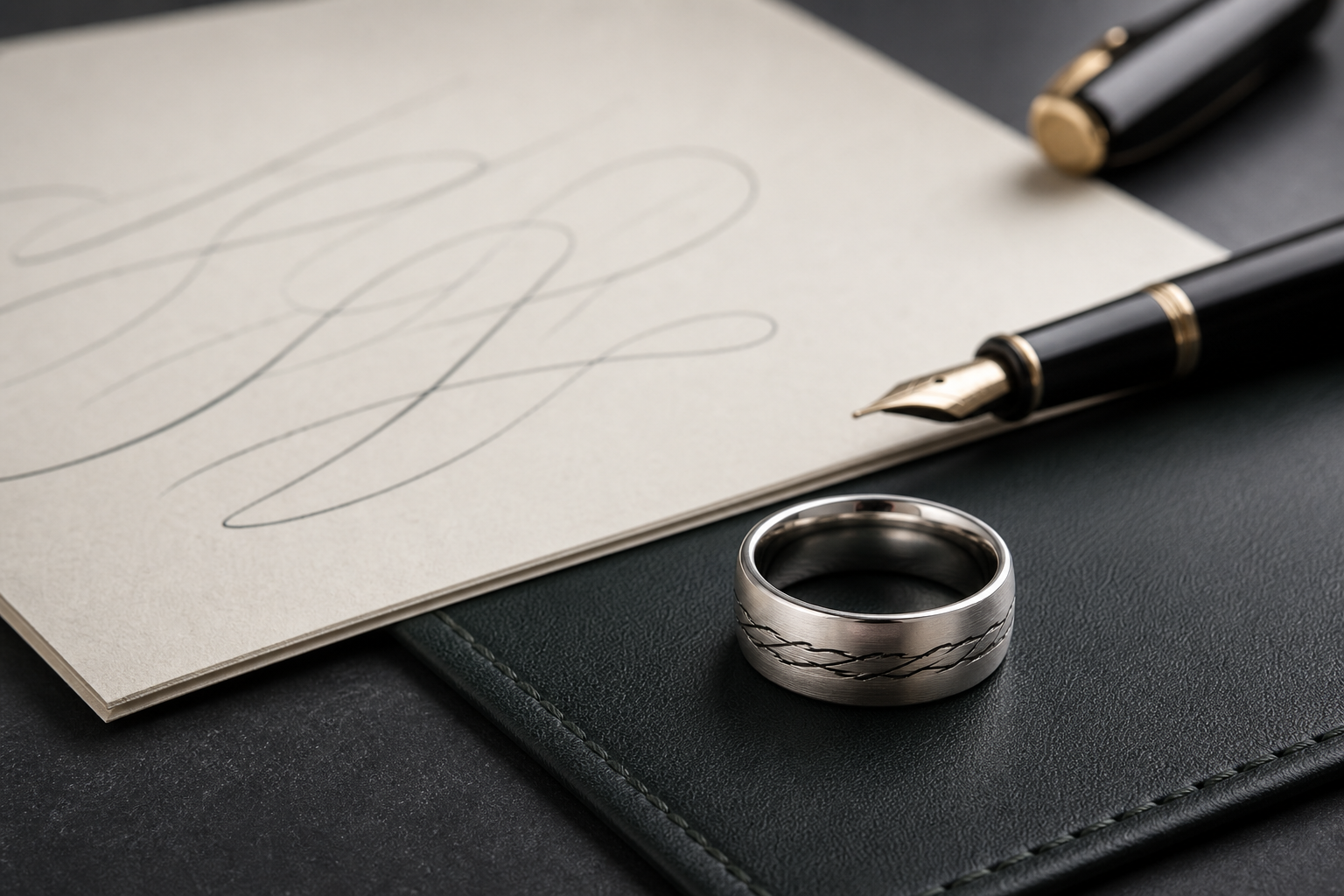
Dog tag details make an unexpected and deeply personal source. The format, last name, blood type, service number, and branch, reduced to one or two lines, can run inside the band as a private tribute that no one else reads. It is the kind of detail that takes a moment to see and stays with you once you do.
Rank and service years give the ring structure. A retired Master Sergeant with 24 years, an E-5 who finished two tours, a commissioned officer who stayed until pension, each has a different story and the ring should tell that one, not a generic military ring version.
The person's own fingerprint belongs on more military memorial rings than it gets, especially when the service included handling classified work, quiet deployments, or the kind of duty that could not be discussed. A fingerprint says everything and nothing, which is sometimes exactly right.
Combine one branch mark or rank with one off-duty detail. A fishing hook beside a Navy anchor. A hunting silhouette beside Army crossed rifles. The home state outline paired with a Guard unit date. One service detail paired with one personal detail is a more honest portrait than pure service iconography.
Short mottos and branch phrases are available and used often, but they become more personal when the family replaces or supplements them with wording the veteran actually used. "Stay hard" or "never quit" from a family tradition outweighs borrowed military language.
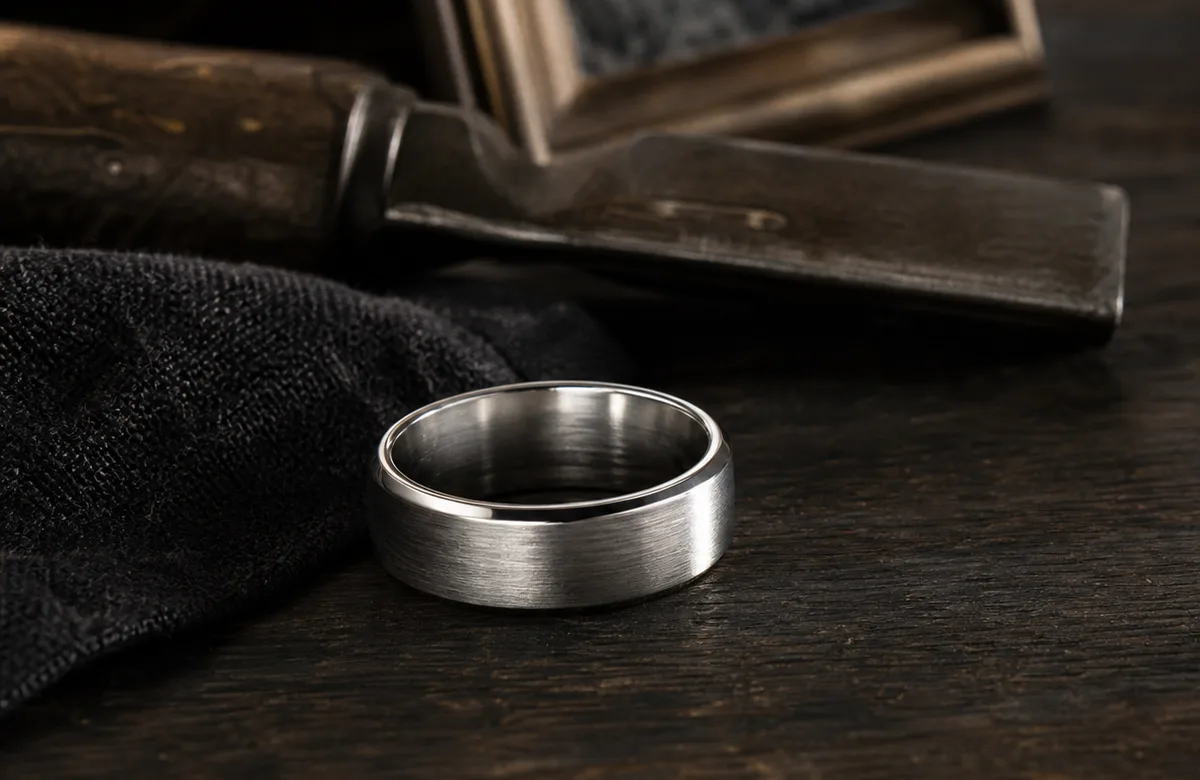
Materials matter more for military tribute rings than for most memorial designs. Dark finishes, matte black, brushed tungsten, and oxidized silver read as duty weight. A polished delicate ring is a harder visual fit for combat service, though it works for nurses, chaplains, and administrative roles with a different texture of service.
Posthumous awards, campaign medals, and theater ribbons can be simplified to initials or small marks when the full insignia is too complex to engrave cleanly at ring scale. A Purple Heart initial, a Combat Infantryman Badge outline, or a campaign year range can carry the full weight without crowding the band.
When the branch, rank, and one off-duty detail are clear, bring the service dates, rank or rate, source file, and a short note about who they were outside of uniform into the Friends of Irony designer.