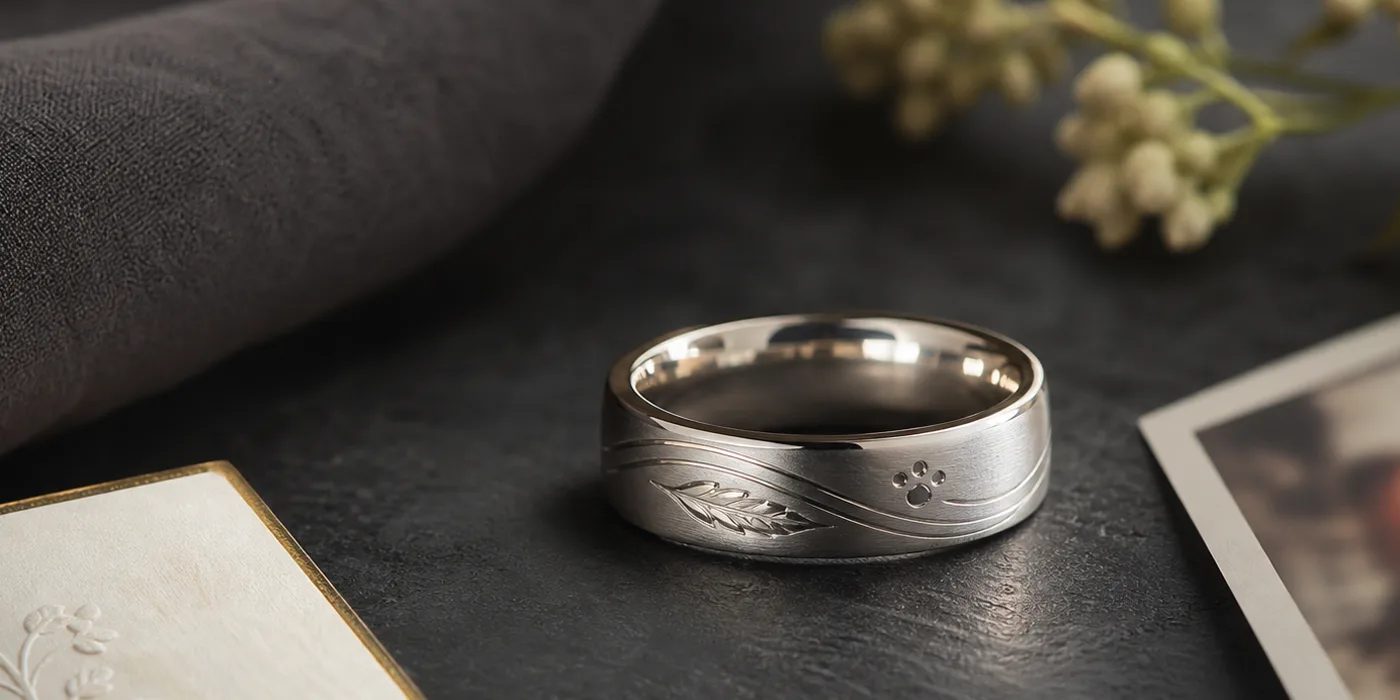

A custom remembrance ring is broader than a formal memorial ring. It can mark a death, but it can also hold a family promise, a season that changed someone, a house that is gone, or a person whose influence still shapes daily life.
Start by naming what the ring is meant to remember. A person needs different source material than a place. A promise needs different wording than a pet. That first decision prevents the ring from becoming a vague keepsake.
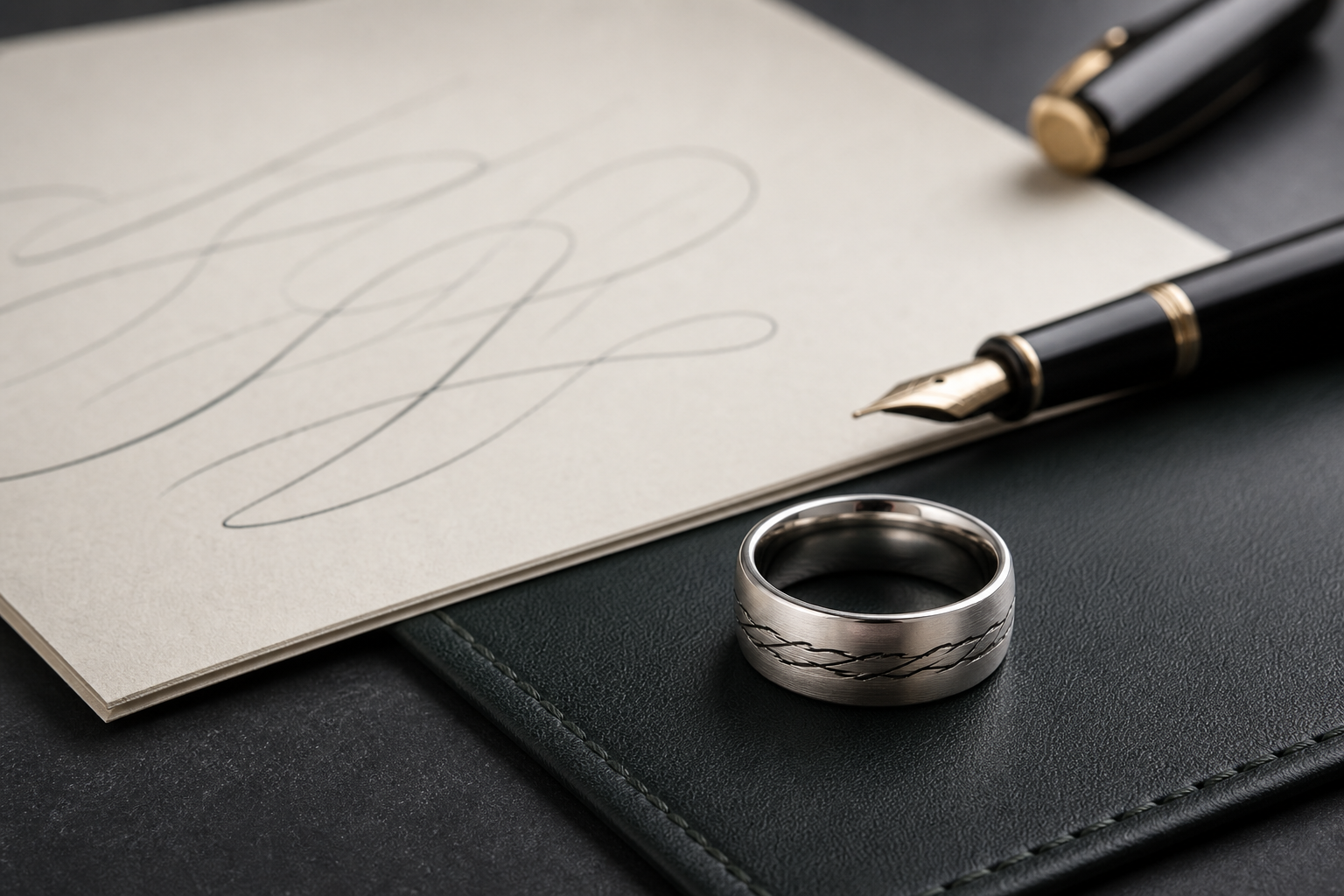
For a loved one, use a source that still feels close to them: handwriting, fingerprint, signature, favorite phrase, initials, or one family-recognized symbol.
For a place, consider coordinates, a house number, a street name, a small skyline, or the outline of a mountain, lake, church, workshop, or farm that mattered.
For a promise, use fewer words. A vow, date, or phrase that was actually spoken will usually carry more than decorative language added later.
The ring's finish should match the way the wearer carries the memory. Brushed silver can feel quiet and familiar. Darker contrast can make a source mark clearer. Polished finishes should be chosen only when they help the design.
The biggest mistake is making remembrance too general. If the ring could be sold to any grieving family without changing the source detail, it is not custom enough yet.
Decide what should be visible and what should remain private. A remembrance ring often works best with one public mark and one inside line that belongs only to the wearer.
Gather original files before designing. Photos, scans, cards, maps, and notes should be as clear as possible so the artwork can simplify intentionally rather than guess.
When the memory type and source are settled, bring the file, wording, date, and one plain explanation of what the ring should remember into the Friends of Irony designer.