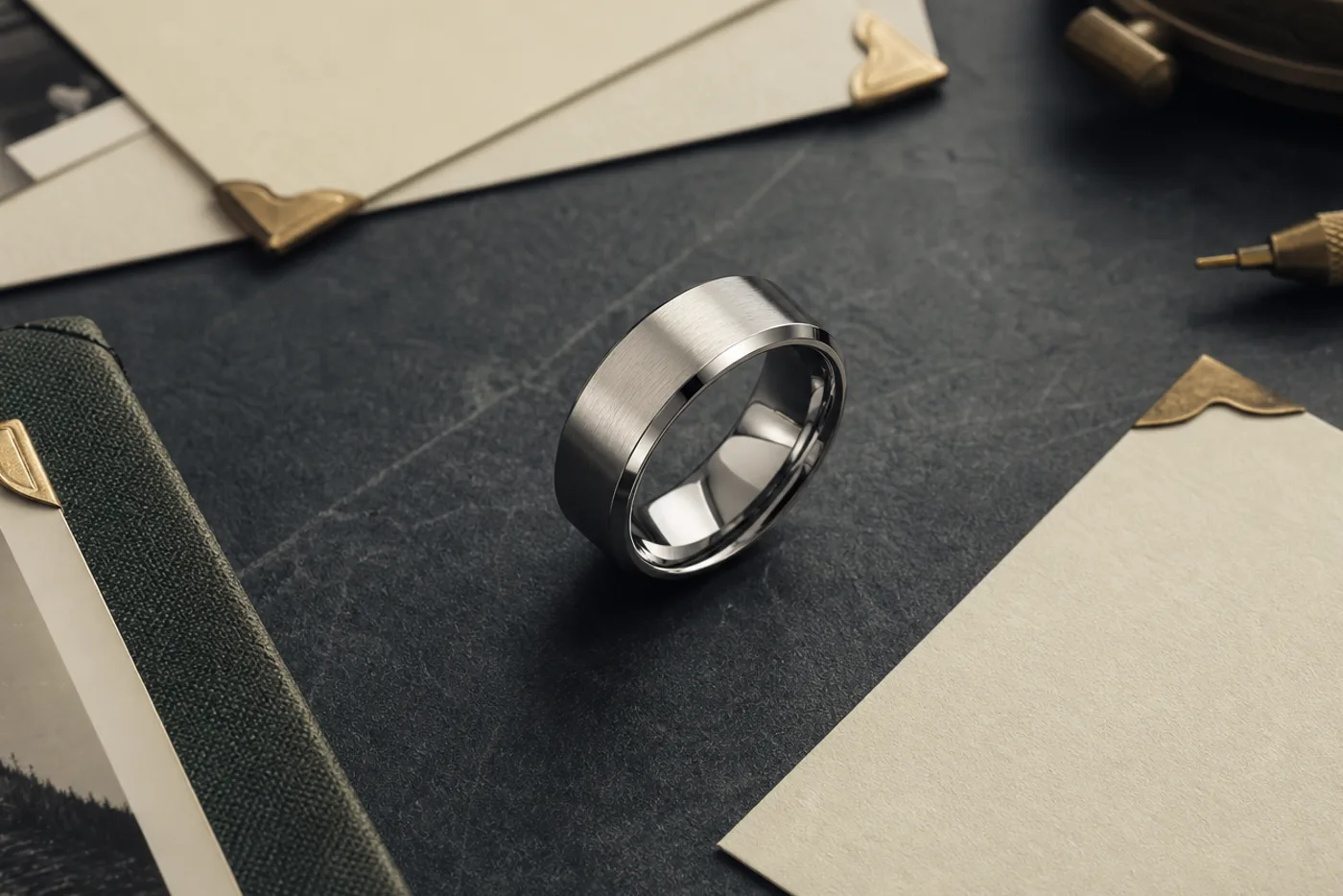

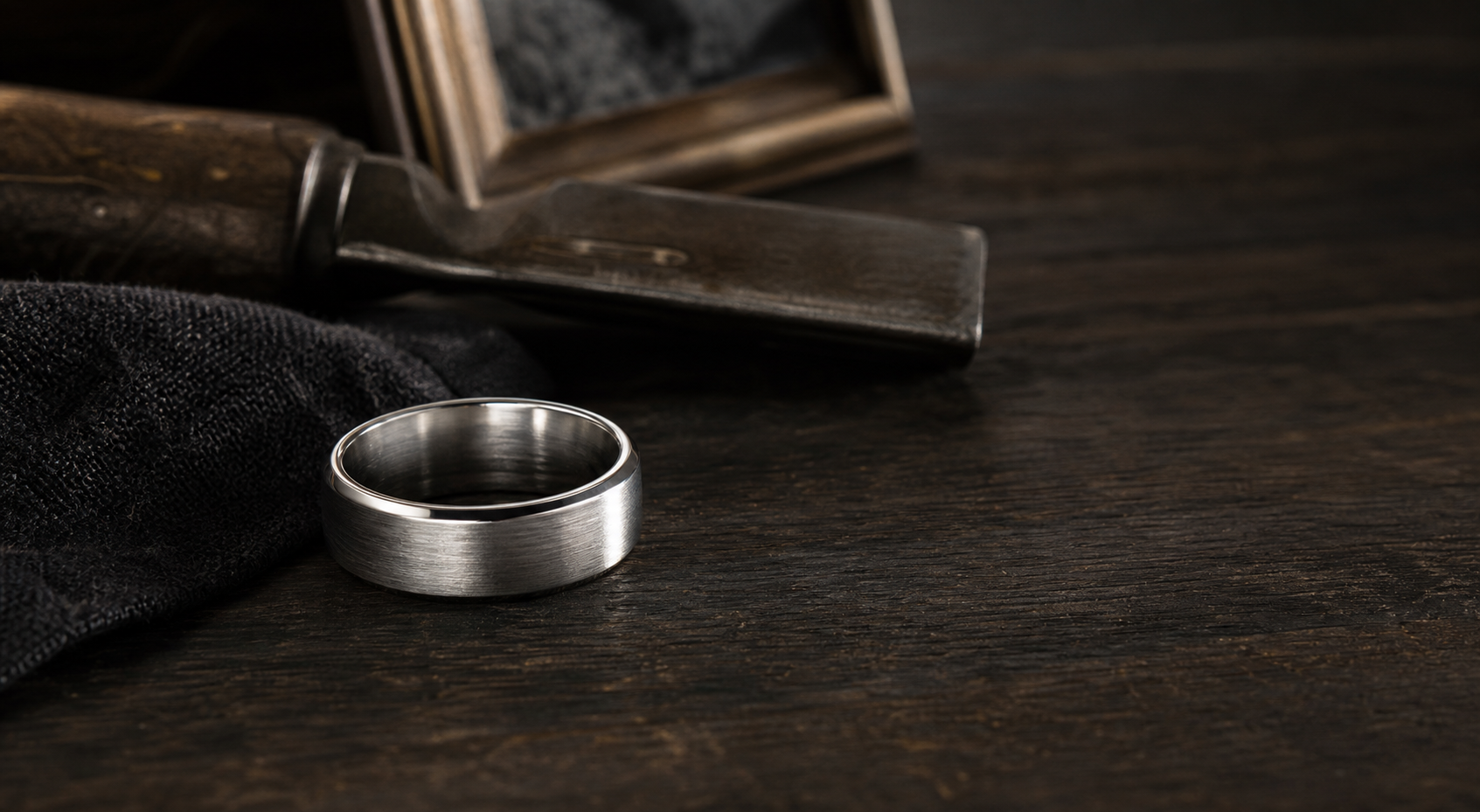
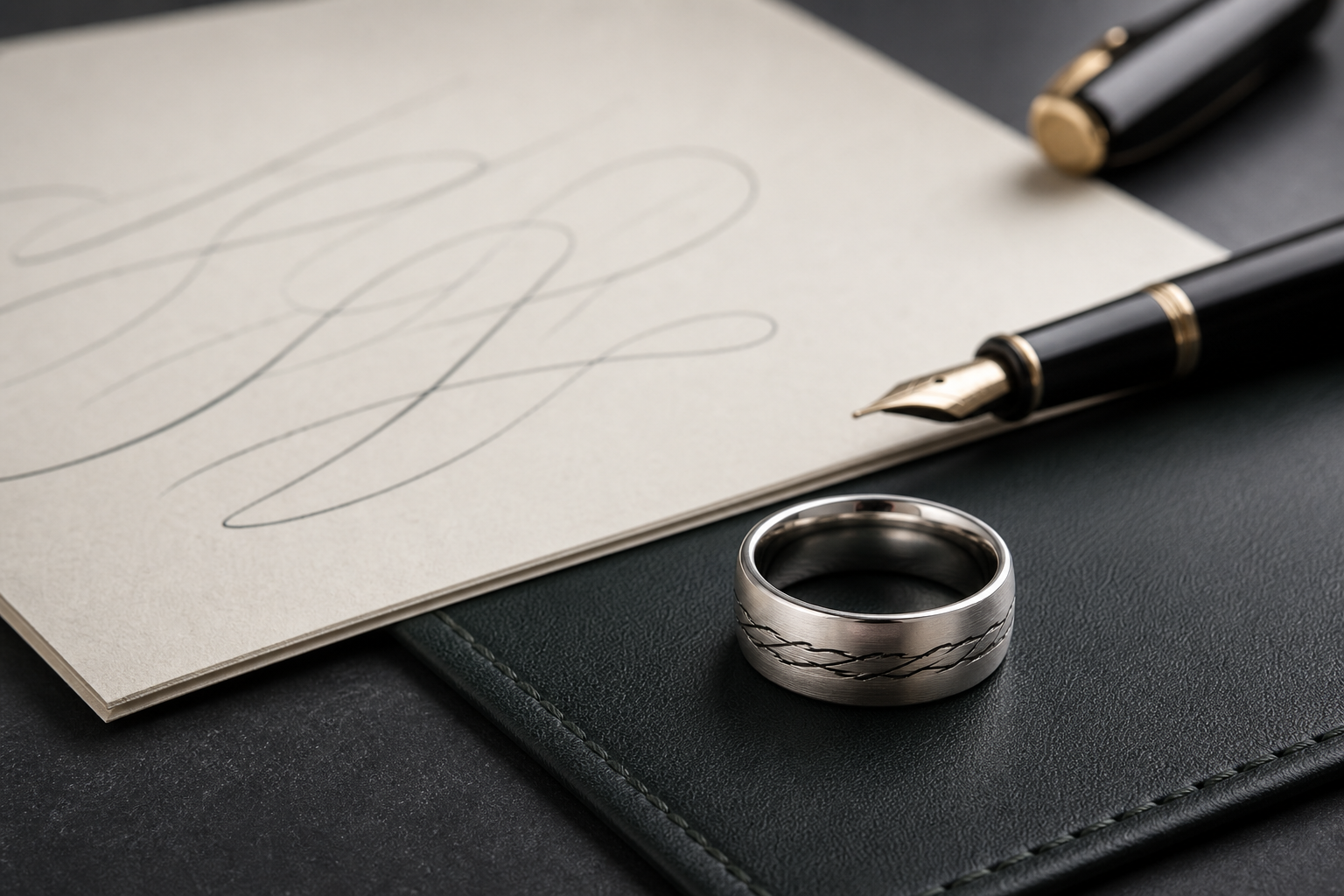
The phrase "in memory of" can feel formal on its own, so the personalization has to bring the ring back to a real person. A first name, nickname, handwriting sample, fingerprint, or private date does that better than adding more memorial language.
Start by deciding whether the ring should be understood by strangers, family, or only the wearer. A public tribute may use a name outside the band. A private tribute may keep the name, date, and phrase inside where only the wearer sees it.
A personalized in-memory-of ring is strongest when the source detail could not belong to anyone else. Handwriting from a card, a fingerprint card, a recipe note, a service emblem, or one family phrase gives the design a real center.
Avoid turning the band into a full obituary. Role, date, place, symbol, and quotation all compete for space when they are used together. Choose the detail that still helps on an ordinary day, then remove the rest.
If the phrase itself matters, keep it short. "In Memory of Dad," "For Mama," "Still Here," or a name with years often reads more clearly than a long sentence that has to be made small.
Inside engraving is useful when the ring needs to stay wearable in public. The outside can remain simple while the inside carries the words the wearer reaches for during harder moments.
Outside engraving works when the family wants the ring to be visibly memorial. In that case, give the outside one job: a name, a print, or a small symbol, not all three.
Source quality matters more than decoration. A clear handwriting scan or sharp print will make a more personal ring than a complex layout built from low-quality files.
Think about the wearer's daily life before choosing band width. A ring worn beside a wedding band or work ring needs cleaner spacing than a keepsake stored in a box.
When the source, phrase, and placement are chosen, bring the exact file, name spelling, dates, and one sentence about the person into the Friends of Irony designer.