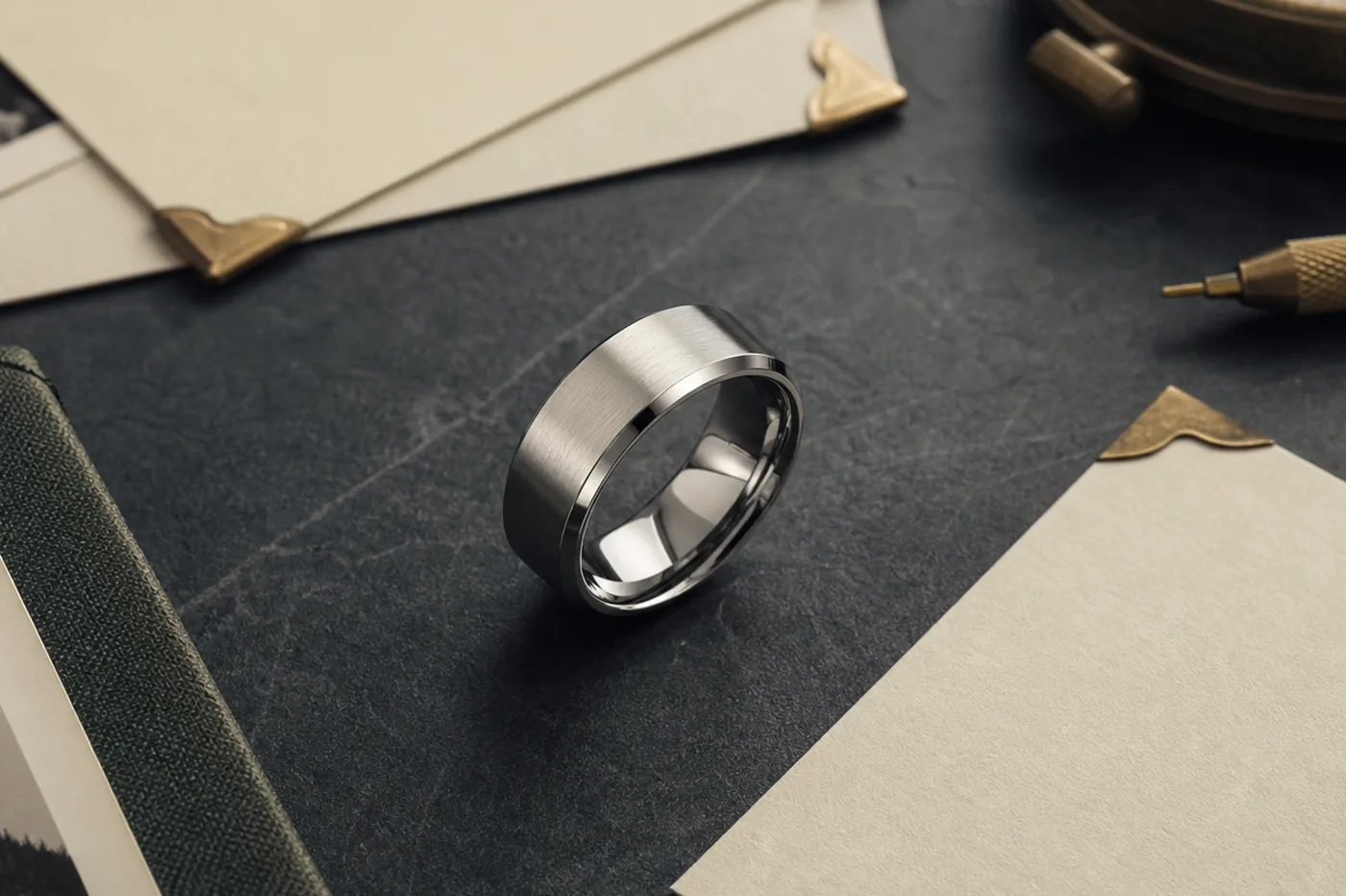

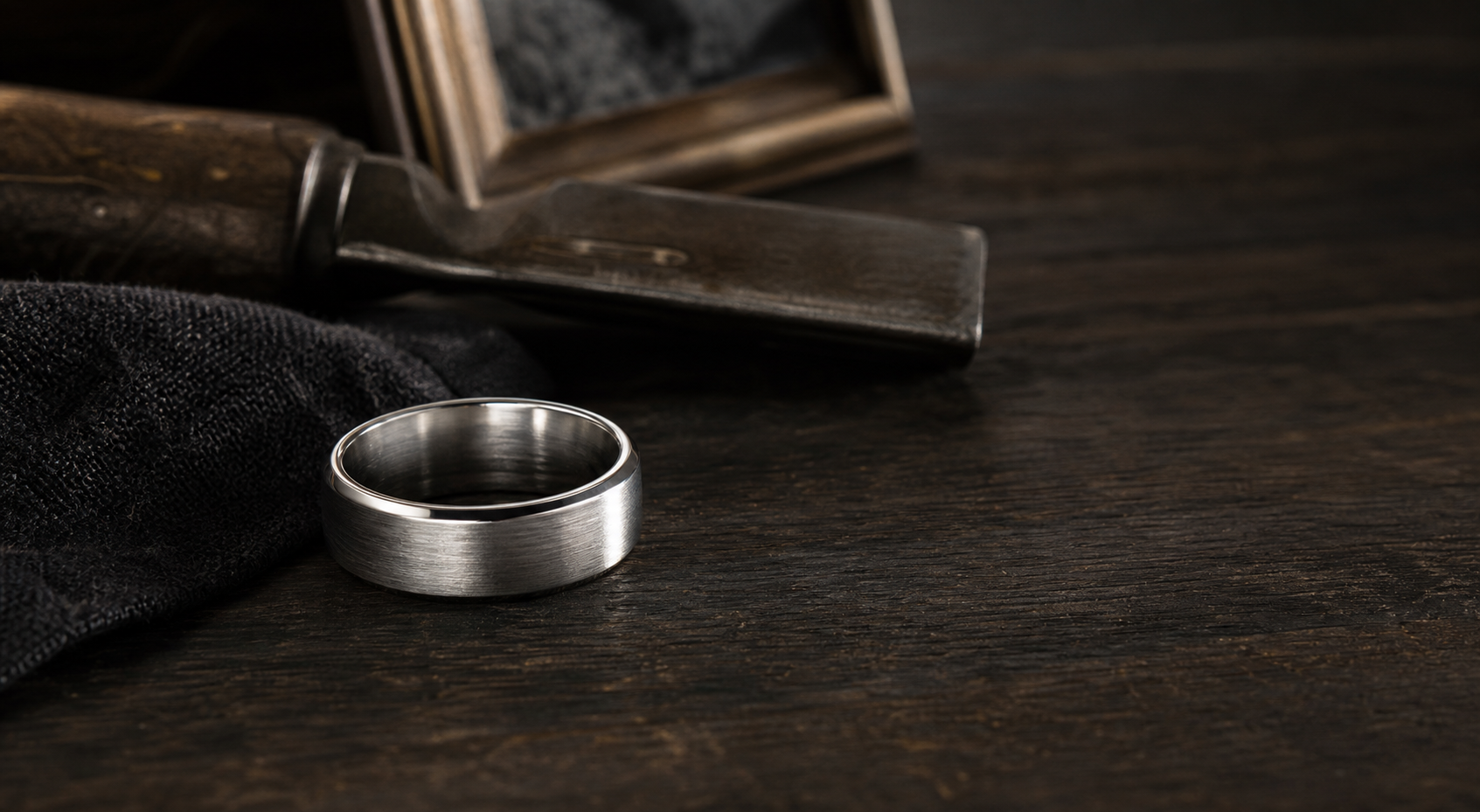
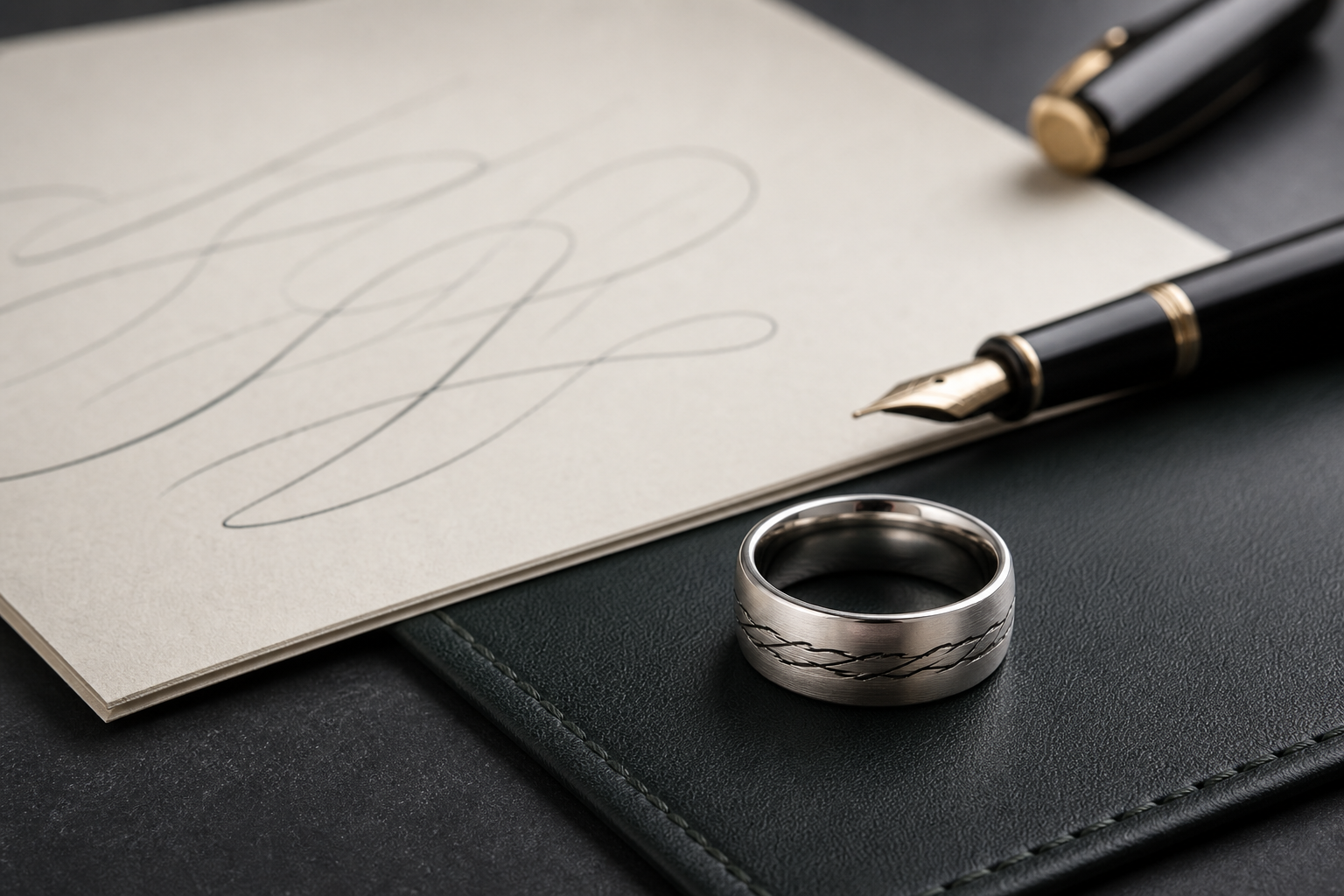
A memorial ring with only a name and date can feel more honest than a design trying to summarize an entire life. The restraint is not empty; it gives the person's name room to be seen.
Choose the name the wearer actually uses in grief. That may be a first name, Dad, Mama, Nana, a military callsign, a childhood nickname, or the way the person signed cards.
Date format changes the tone. A full birth and death date feels formal. Years only feels quieter. One meaningful date, such as a wedding date or the day a child was born, can be more personal than a life span.
If the ring will be worn every day, keep the outside simple and move the date inside. Outside name, inside dates is a clean structure that keeps the band readable.
If the date is the most important part of the story, reverse the structure. A wedding date, sobriety date, deployment date, or final goodbye can sit outside while the name stays inside.
One supporting symbol can work when it clarifies the relationship: a cross, flower, small heart, service mark, fingerprint crop, or handwriting stroke. The symbol should not compete with the name.
Avoid using three date lines unless there is a clear reason. Too many numbers make the ring feel archival, and most wearers need comfort more than recordkeeping.
Name length should guide band width. A long name or two-name tribute needs a wider surface or a shorter wording plan before the artwork stage begins.
Ask the family to confirm spelling and date order before design. Memorial jewelry is emotionally hard to revise, and a preventable typo can turn a careful gift into another hard task.
When the wording is final, bring the exact name, date format, optional symbol, and inside/outside preference into the Friends of Irony designer.