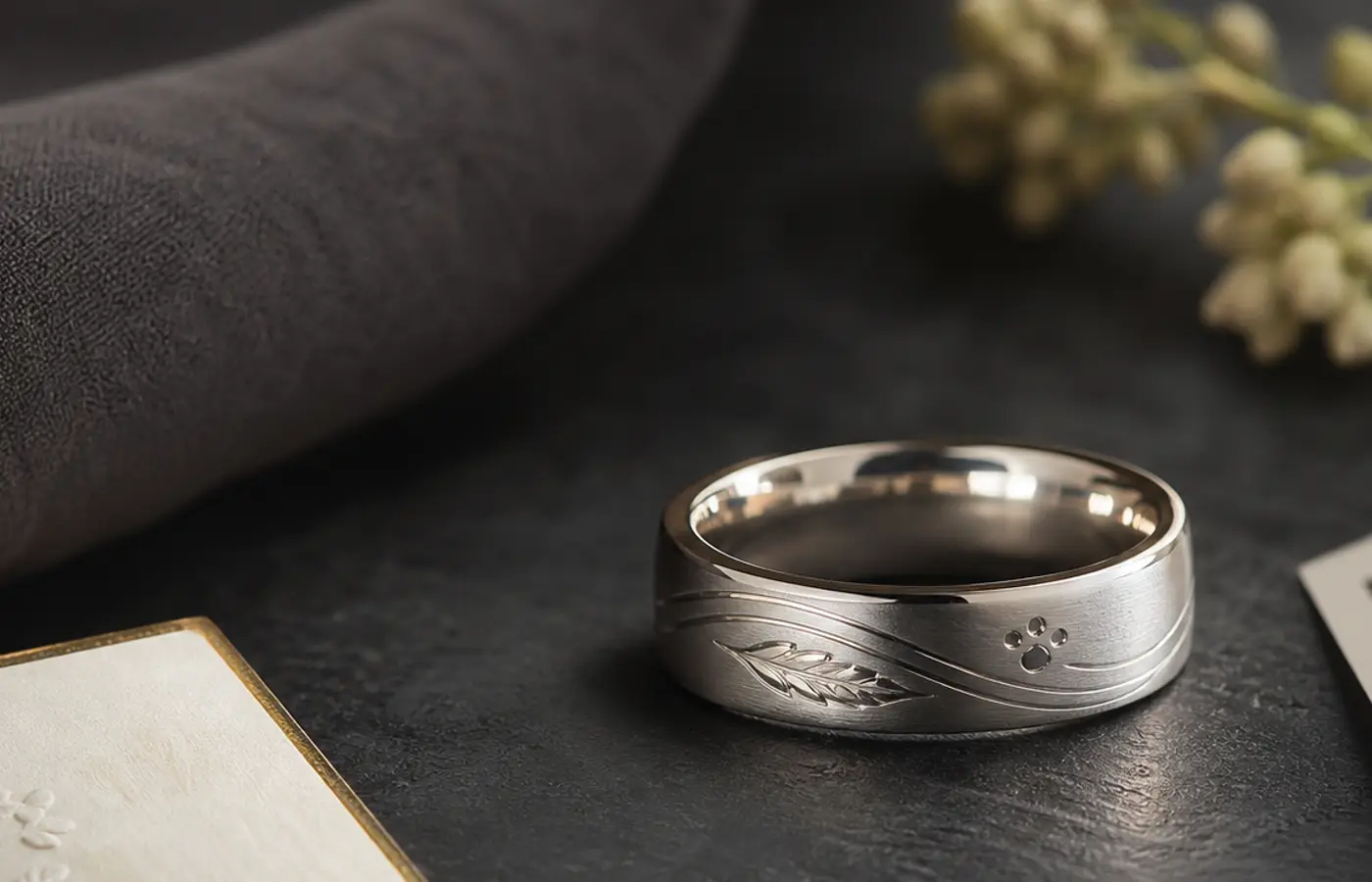

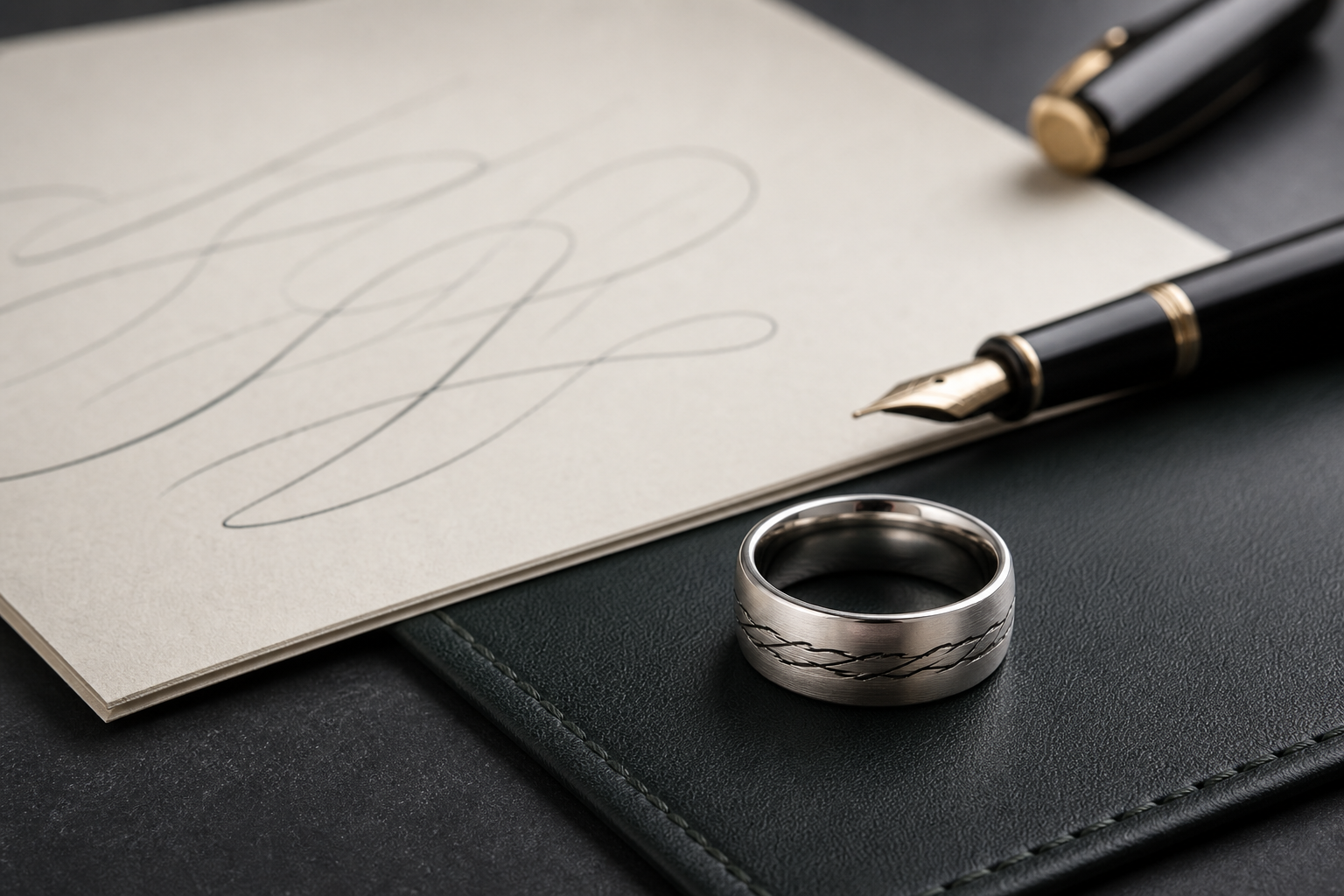
A personalized memory ring should not feel like a blank memorial template with a name added at the end. Start with the detail that still has motion in it: the phrase they said, the place they loved, the tool they held, the recipe card they wrote on, or the nickname only family used.
Write down the possible anchors before choosing a design. A first name, signature, coordinates, birth flower, service mark, faith symbol, favorite lake, handwriting word, or date range can all work, but only one should feel like the center.
If the memory is private, let the outside stay symbolic and move the exact words inside. A visible flower, cross, fingerprint crop, or small place mark can be enough without making the wearer explain the whole story.
If the memory is shared by the family, a name or family title outside may be right. The ring can say Mama, Dad, Papa, Aunt Beth, Coach, or a nickname plainly when that is the word everyone still uses.
Personalization does not mean using every available source. A photo, handwriting, fingerprint, and long phrase on the same band can make each detail weaker instead of stronger.
Choose the source file that has the most truth and the least cleanup risk. A clear handwriting crop, original photo, scan, or high-contrast print is better than a screenshot passed through several phones.
Dates deserve a separate decision. Some memory rings need a year range, some need one anniversary, and some feel kinder with no date at all.
For a gift, confirm exact spelling and the wearer relationship before ordering. Personalized grief jewelry is not the place for guessing at initials, hyphens, family titles, or whether a date should be included.
The personalization test is simple: one exact detail should make the ring feel like it belongs to this memory and no other. If the design needs a paragraph to explain why it is personal, simplify it.
Bring the memory anchor, exact wording, source file, privacy preference, and one backup phrase into the Friends of Irony designer.