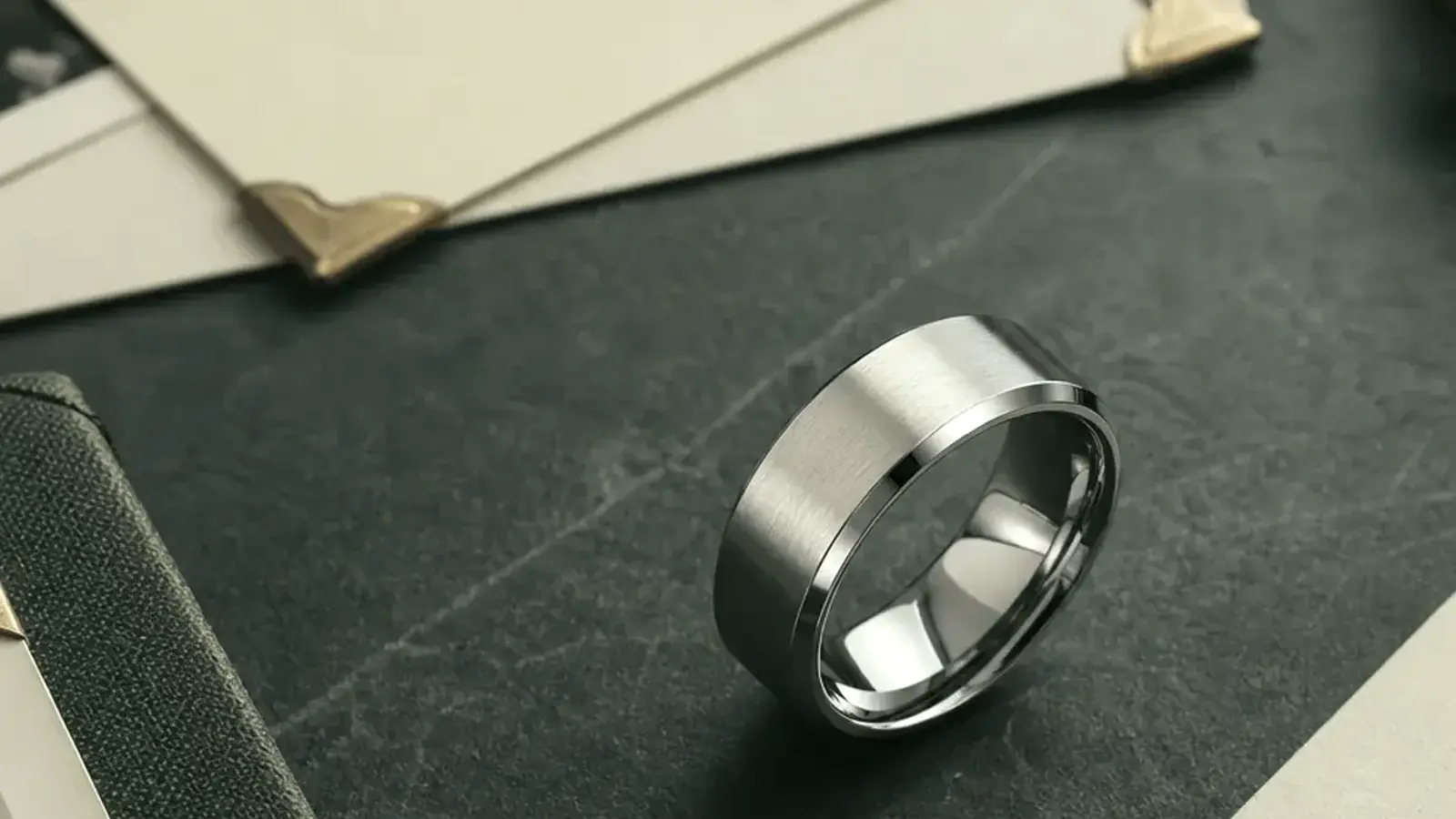

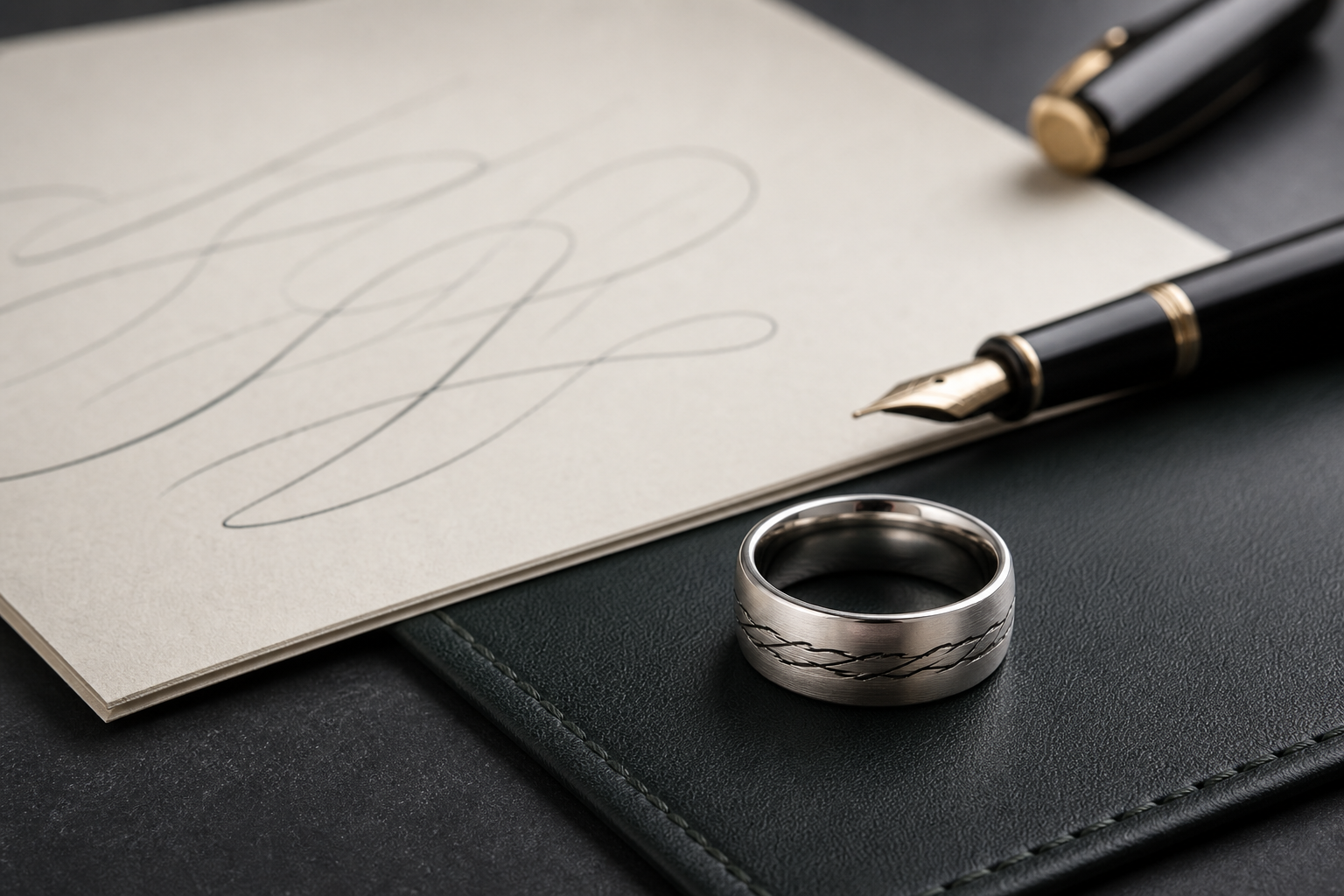
A ring for early pregnancy loss should not make the family prove that the grief is real. The design can be very small and still carry the full weight of the baby, hope, and future that were already loved.
Start with privacy. Some parents want a ring that can be answered simply if someone asks; others want a quiet inside line that never needs to be explained in public.
Choose one anchor detail before choosing style. That anchor might be a name, initials, a month, a tiny birth flower, a star, a heart, a prayer reference, or a phrase the parent already uses.
Dates can be delicate here. Some families prefer the due month, some prefer the loss date, and some prefer no date at all. Use the date language that feels survivable, not the format that looks most complete.
If the baby had a name, confirm spelling and placement carefully. If there was no name, a small symbol or private phrase can still make the ring specific without forcing a decision.
Keep visible wording short. Loved Already, Held Always, Little One, Our Baby, Still Loved, or a single initial can carry more than a long sentence on a narrow band.
A soft silver finish, tiny flower, star, or inside engraving can make the ring feel gentle instead of decorative. The finish should support calm wear, not demand attention.
For gifts, avoid surprising the parent with a public phrase. Ask whether the ring should be visible or private, and let that answer shape every design choice.
The right design usually feels like a place to put love, not a complete explanation of the loss. If the ring starts to feel like it must tell the whole story, remove one detail.
Bring the preferred privacy level, name or no-name decision, date preference, one symbol, and one short phrase into the Friends of Irony designer.