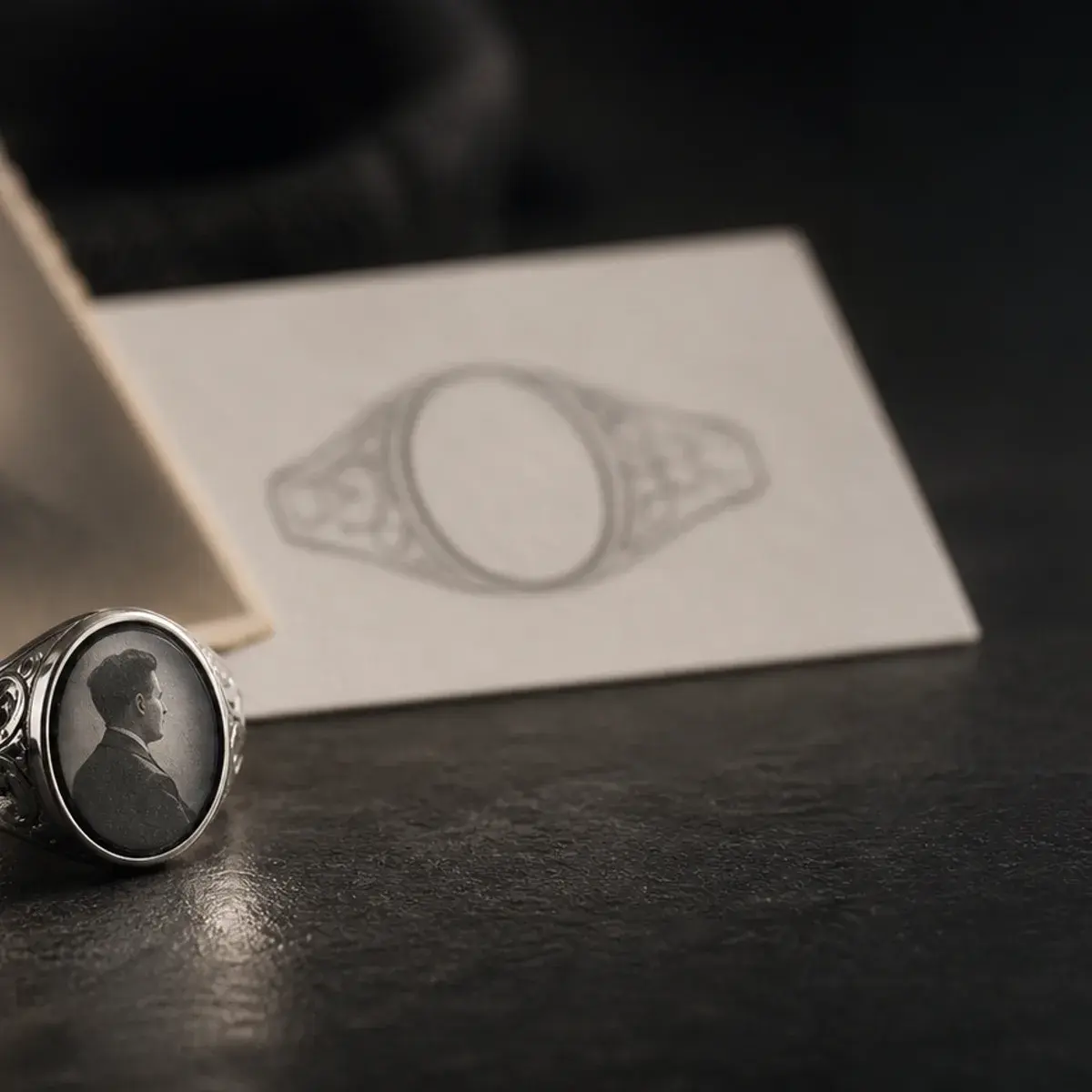


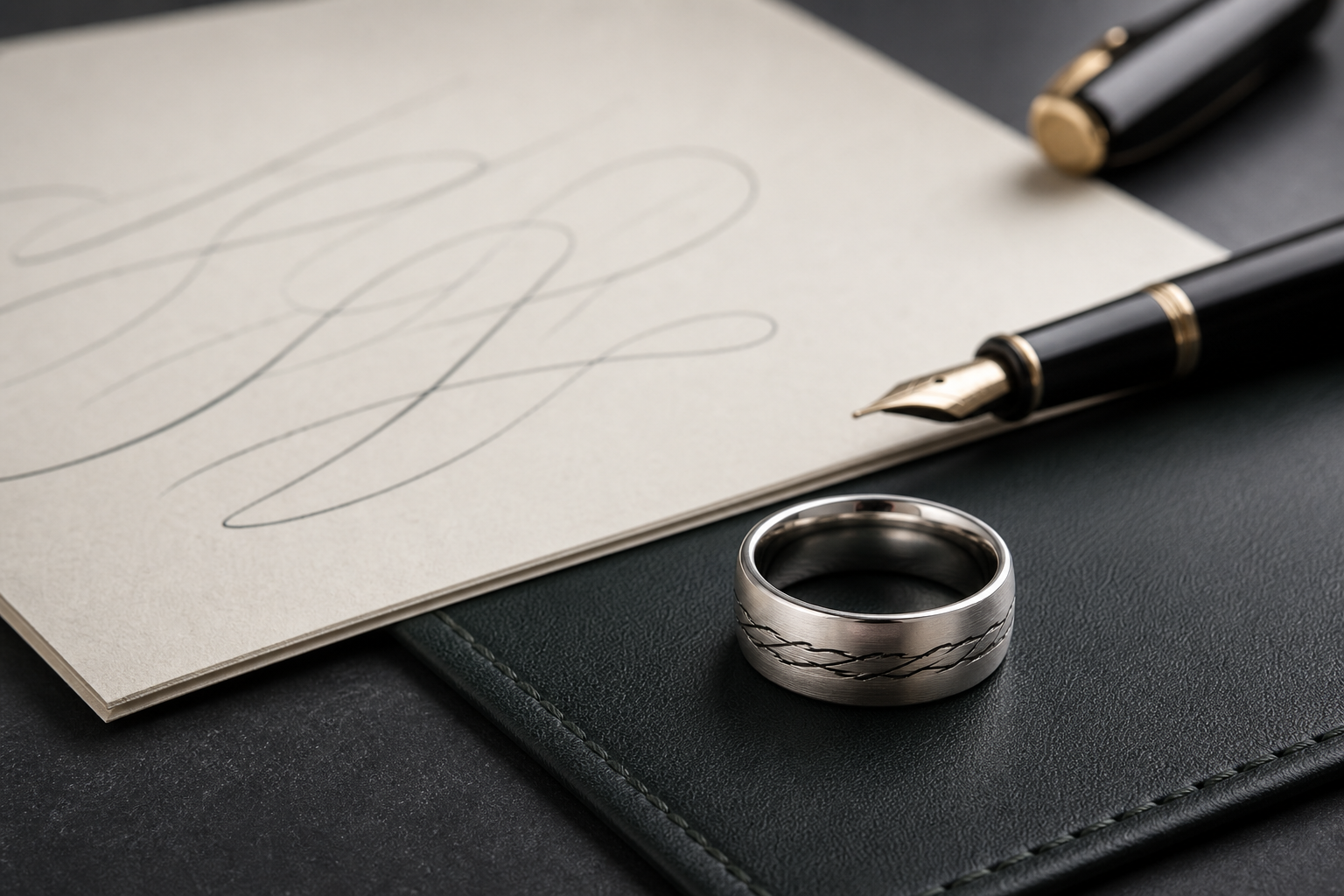
A memorial promise ring should give the wearer one sentence that can be felt at a glance, not a paragraph that only reads well in a calm room.
Start with what the promise means when spoken aloud. If it cannot survive one normal reading aloud, it should be shortened.
Pair a short promise with a simple symbol only when that symbol clarifies the line. Symbols that duplicate the words can make the message feel crowded.
Outside promise text should be readable in movement, because rings are used in ordinary moments, not only when people are sitting down to reflect.
If you include faith language, keep it short and exact. A short phrase avoids both ambiguity and accidental overloading.
Consider whether the promise should be public. Some vows are deeply meaningful privately and belong inside where they stay durable.
Avoid adding multiple dates to the promise line. When the emotion is heavy, one date is often enough to anchor the context.
If a source image carries the relationship story, use that image as the support detail and keep the promise statement concise.
The strongest promise rings still leave white space. That space protects the text, and protects grief, from becoming a design problem.
Before opening the designer, lock one promise line, one fallback short version, and one placement choice.