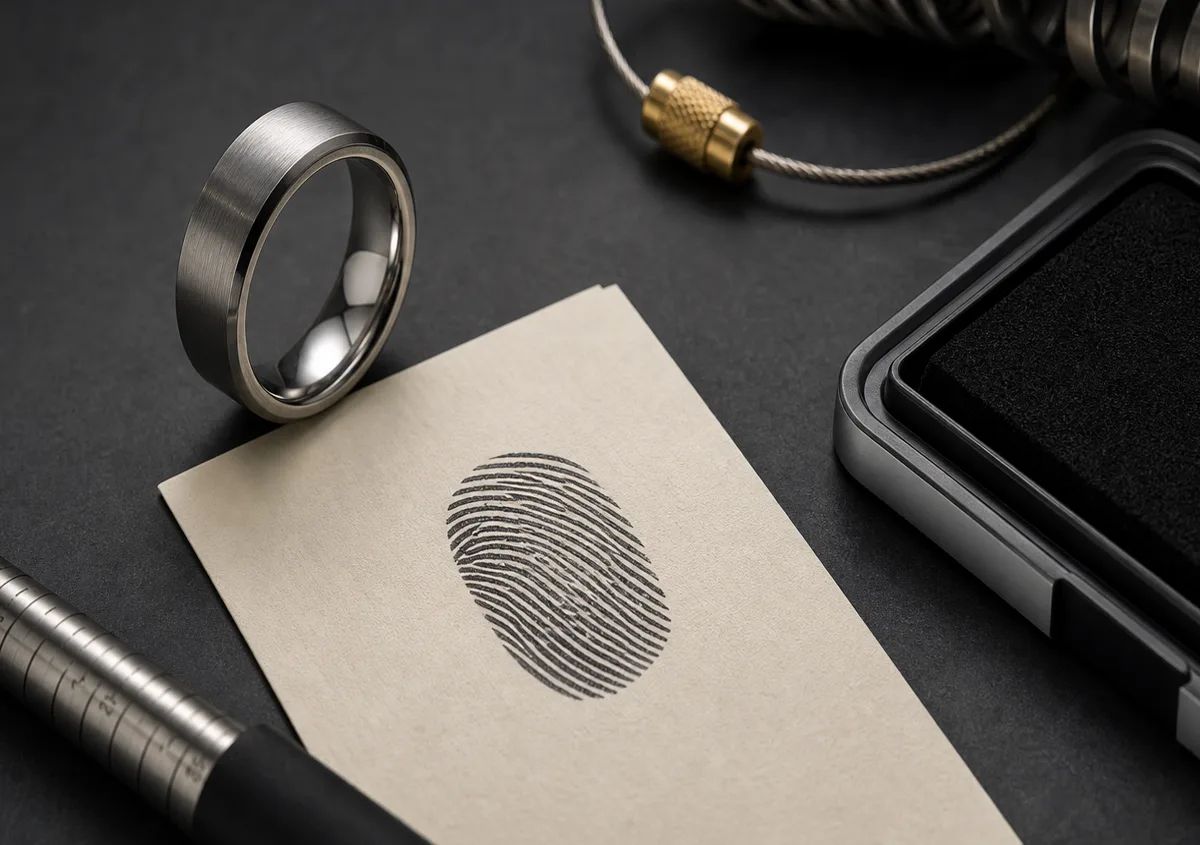

A memorial fingerprint ring begins before any band style is chosen. The source image decides how much of the person's real touch can survive at ring size.
Ink cards, funeral-home keepsake cards, government documents, scanned paper, and phone photos can all work, but they do not behave the same once cropped and simplified.
Look first for ridge direction. If the print shows clear loops, whorls, or flowing lines in one area, that region is usually more useful than a complete but muddy fingerprint.
A partial print is not a failure. A clean corner, thumb edge, or small ridge field often engraves with more dignity than a full print where every line collapses together.
Photograph paper sources straight-on in natural light, then save the original file. Screenshots and messaging-app downloads often compress the very details the ring needs.
Before adding a name or date, test the print in grayscale and reduce it on screen until it is close to ring scale. If the mark still has movement, it may be a strong candidate.
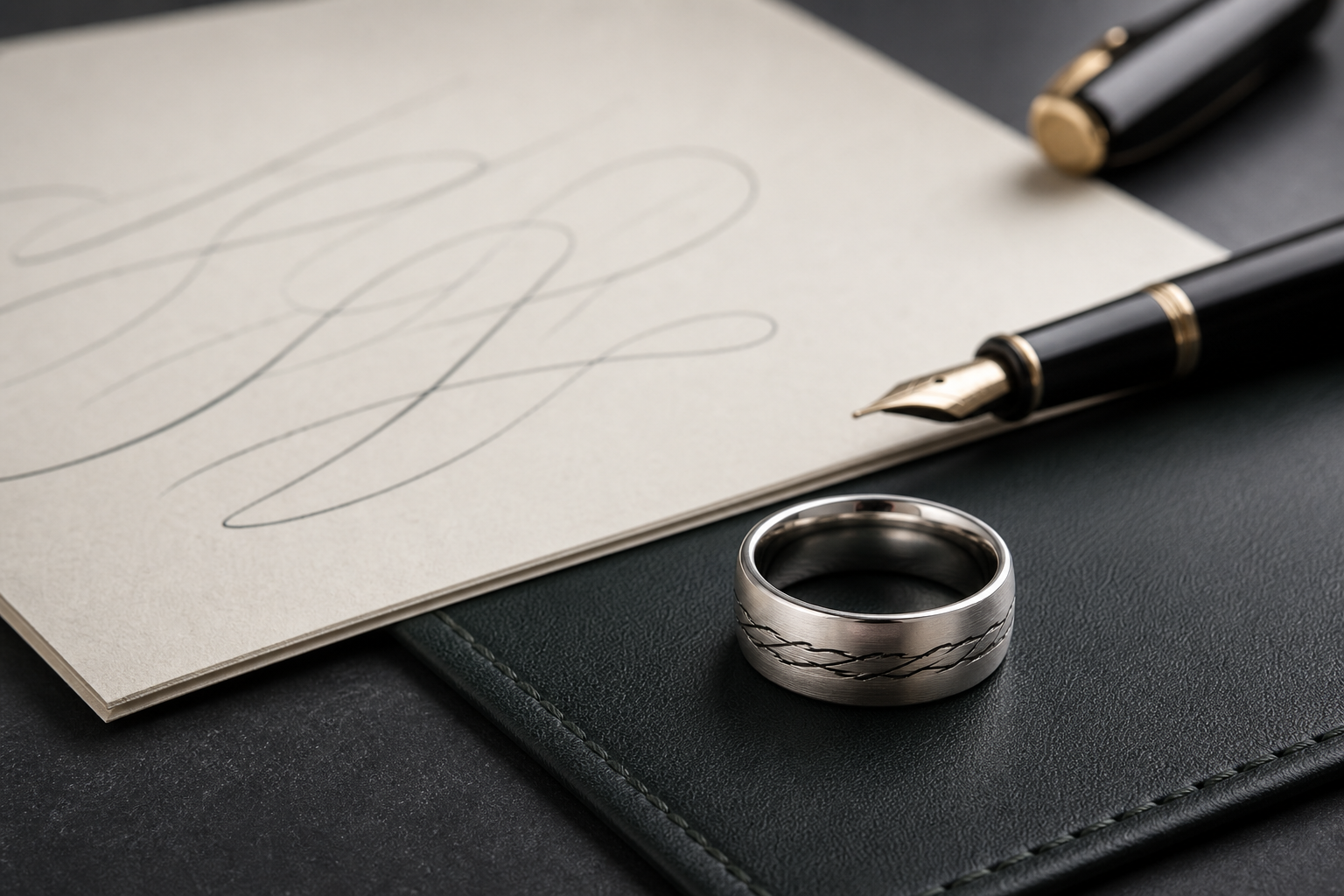
Names, initials, and dates should support the print rather than compete with it. Inside placement is often the right home for private wording when the print needs room outside.
Avoid asking the ring to preserve every ridge. The goal is not forensic reconstruction; it is a faithful keepsake that remains readable during ordinary wear.
If several relatives disagree on which print to use, choose the source that would still comfort the wearer on a hard day without needing an explanation.
Bring the original print file, one preferred crop if you have it, exact name spelling, dates, and a short note about why that print matters into the Friends of Irony designer.