

An uncle often occupies a particular corner of family life that no other person fills. Not bound by the daily structure of parenting, he could be the one who showed a nephew how to change a tire, taught a niece to fish, or carried the joke that became a family legend.
Grief for an uncle is real and often arrives without as much ceremony as losing a parent. A memorial ring built specifically around what made him who he was to you is one of the few ways that kind of quiet grief gets a visible form.
Start with the thing he was known for. A hunting cabin phrase, his workshop initials, the make of the truck he drove for twenty years, a fishing spot name, a military branch mark, a specific nickname the whole family used.
Visible detail on the outside of the ring works best when it is recognizable at a glance by the people who knew him. A date, his initials, a service branch crest, or a short phrase that he actually said all land better than formal memorial wording.
Inside the ring, a private line that the family never heard can stay between the wearer and the memory. The two sides of the band carry different kinds of meaning and do not need to match in tone.
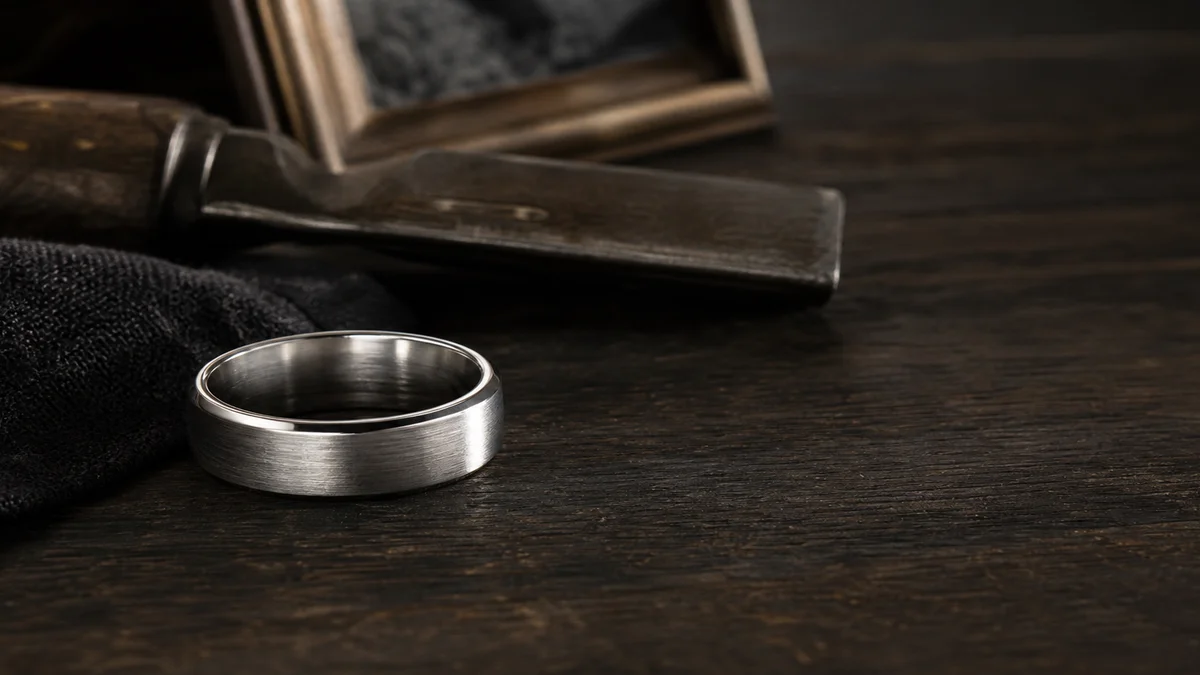
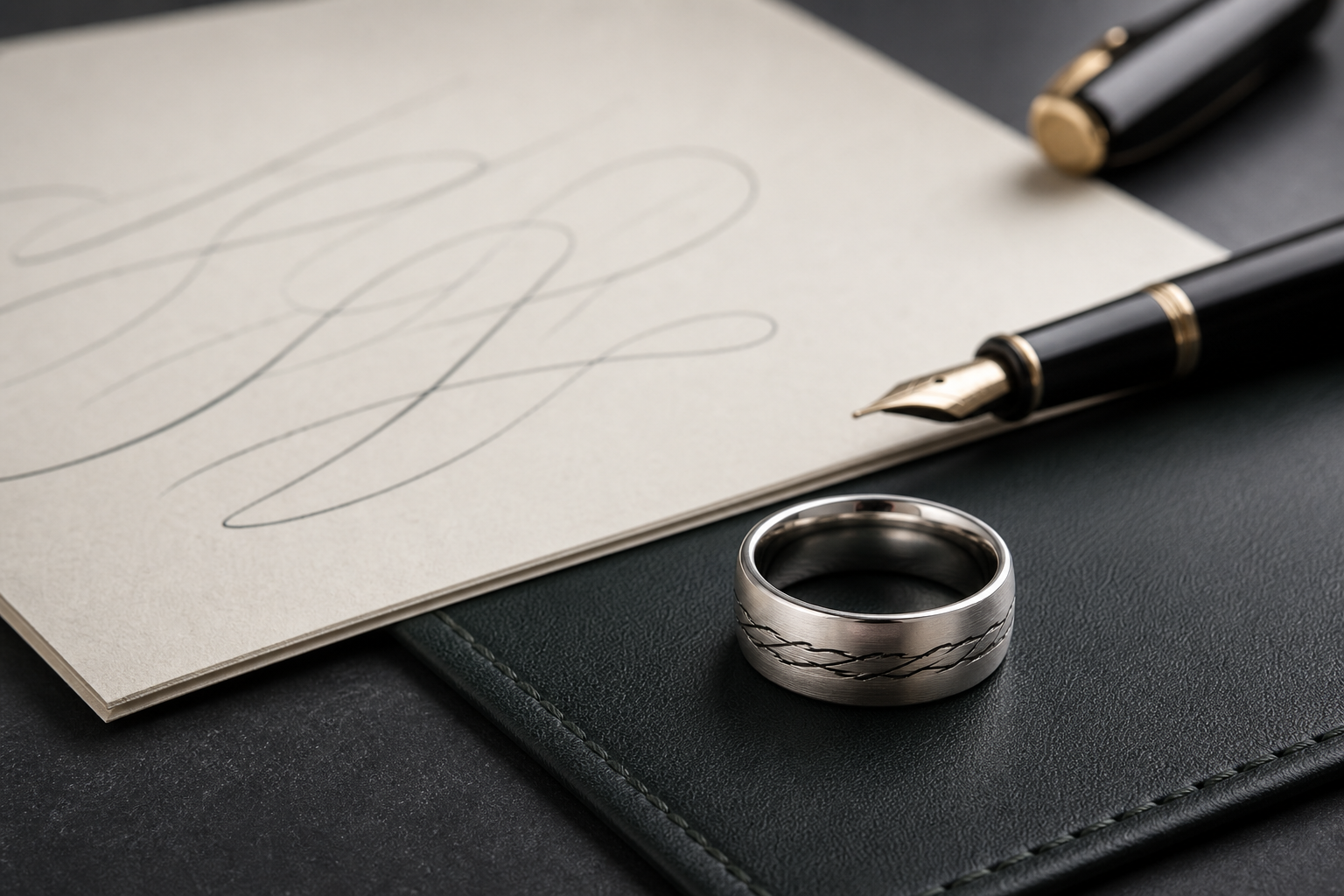
Masculine finishes, brushed silver, and dark grooves read well for uncle memorial rings that will be worn through ordinary work. A ring that can be worn on a job site or at the shop carries more meaning than one that stays in a drawer.
Gather source files before opening the designer. A clear photo, a scan of his handwriting, a service document, a favorite phrase on a card, or a sharp image of his hands at work all give the designer something real to simplify.
Avoid trying to compress every relationship year into a single band. One precise detail that only your branch of the family would recognize always hits harder than a general memorial ring that could belong to anyone's uncle.
The question that organizes the rest is this: which memory would he have wanted on a ring, and which memory do you need to carry? Those two answers are often different, and the right ring answers the second one.
Once you have the name, one source file, one date, and one phrase in mind, bring them into the Friends of Irony designer and let that starting point guide the rest.