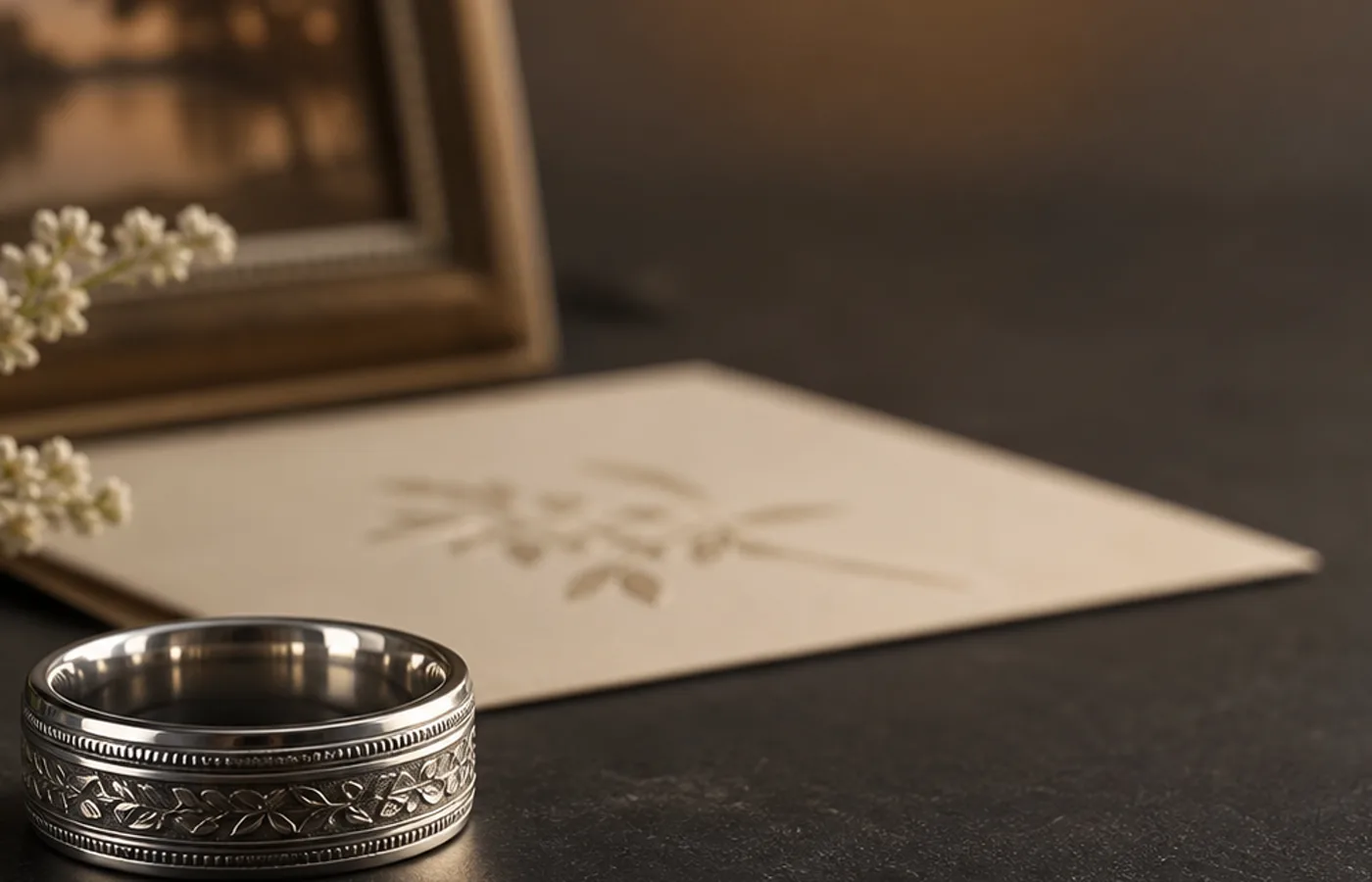

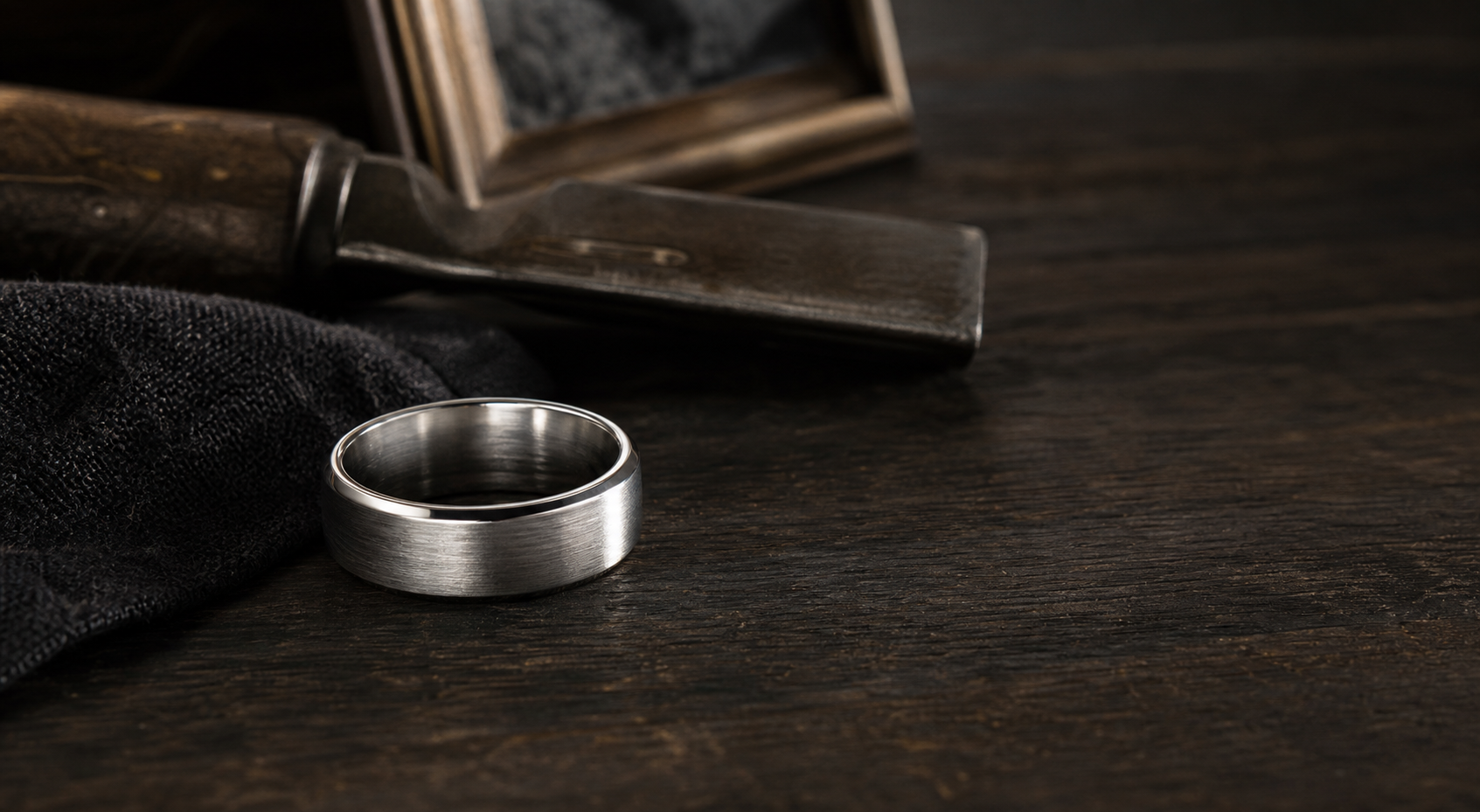
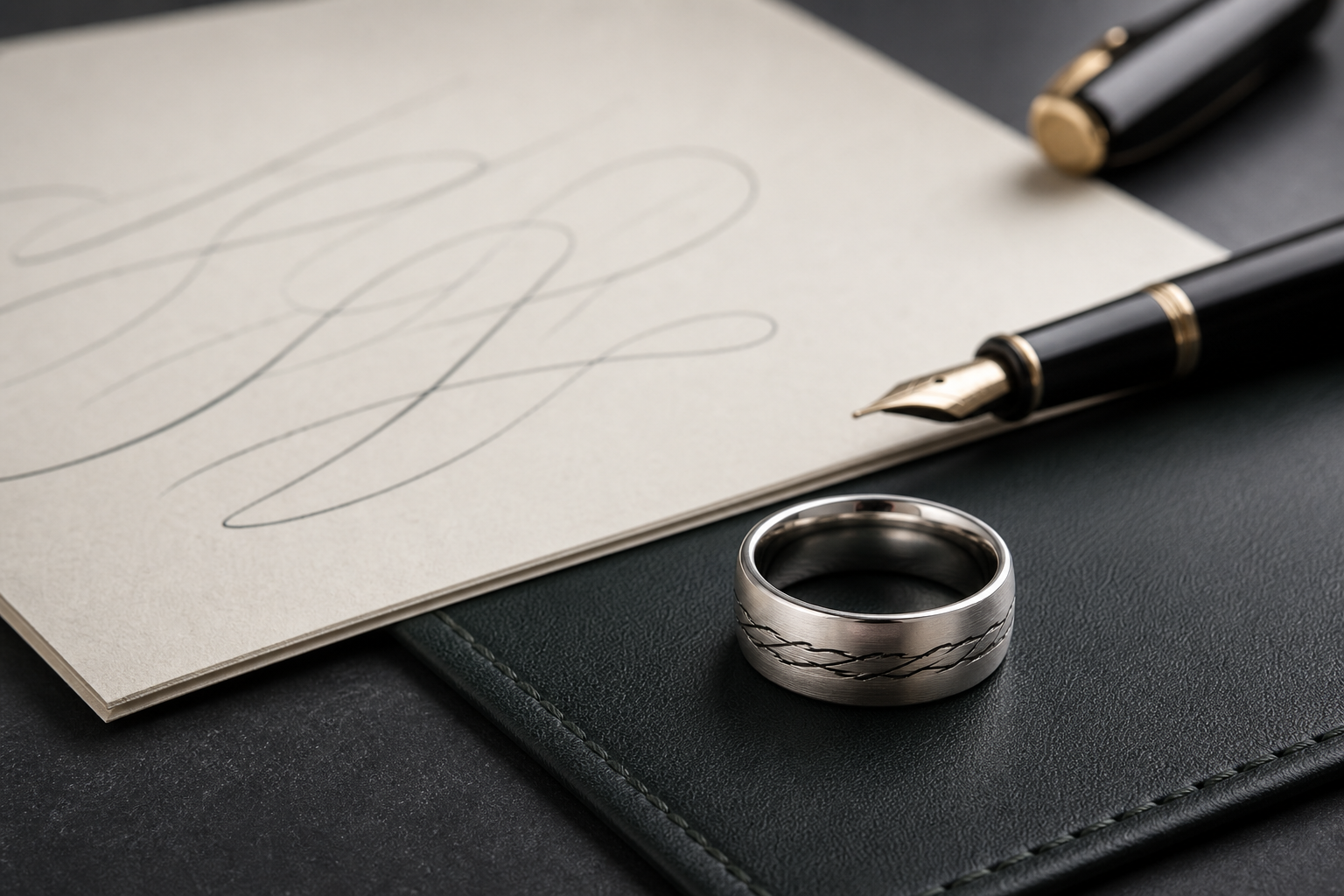
A memorial ring with a birth flower works best when the flower is treated as evidence of the person, not as a pretty filler symbol. The month matters because it points back to a specific life.
Start by confirming the birth month and the flower you want to use. Some months have multiple traditional flowers, so choose the one your family actually associates with the person instead of assuming the first chart you find is final.
A flower outline needs simplification before it can be engraved on a narrow band. Petals, stems, and leaves should be reduced to a clean silhouette or line drawing that still reads at ring distance.
If the flower is the main outside element, keep the person's name, initials, or dates short. A full floral spray with a long memorial sentence usually becomes hard to read once it is scaled down.
Handwriting pairs especially well with birth flowers when the handwriting is only one or two words. A signature beside a small flower can feel more personal than a large bouquet design with no human source.
Consider whether the flower should be public or private. Some wearers want the floral mark visible; others prefer a simple outside band with the flower and message hidden inside.
Metal finish changes the mood. Brushed silver keeps the ring quiet, while a warmer finish can make floral engraving feel softer without making the memorial design ornamental.
Avoid choosing a flower only because it is visually elaborate. The best memorial flower is the one tied to the person's month, garden, perfume, wedding flowers, kitchen table, or family story.
Before opening the designer, decide which job the flower has: birth month, favorite flower, family garden memory, faith symbol, or seasonal marker. That one answer should control the composition.
Bring the flower choice, exact name spelling, date, and any handwriting source into the Friends of Irony designer so the ring can keep one floral idea clear from the start.