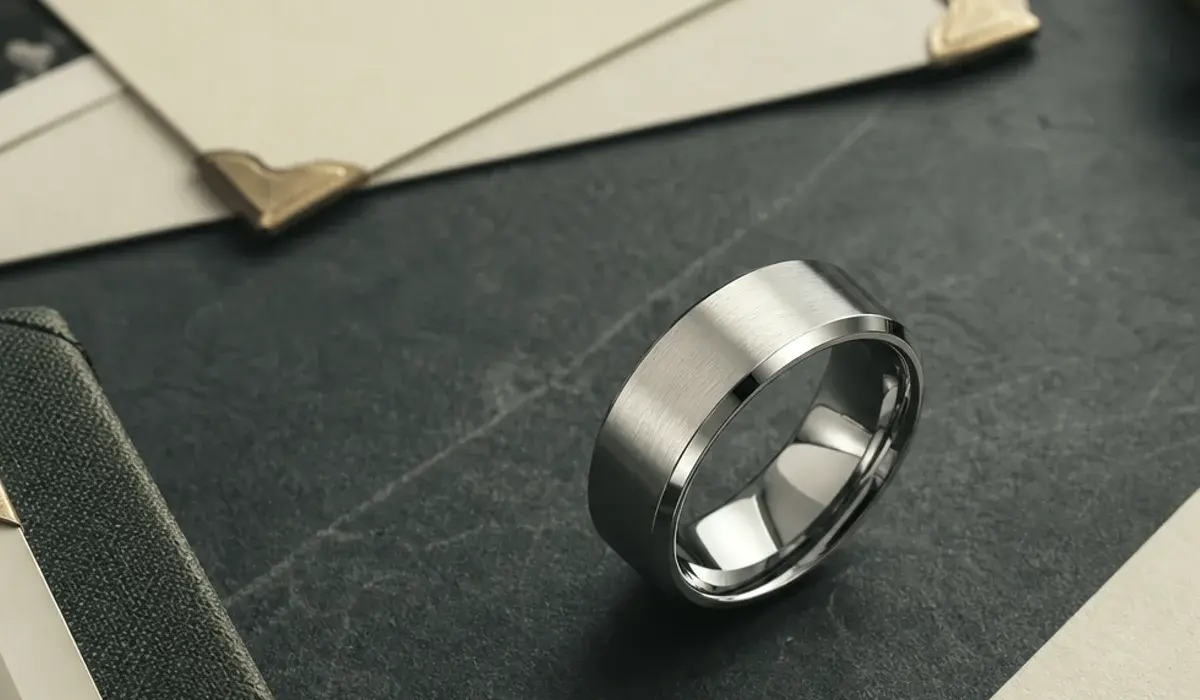

Pregnancy loss grief sits in an unusual place. The world did not always acknowledge the relationship before it can acknowledge the loss, and most people navigating miscarriage, stillbirth, or early infant loss find the formal structures of memorial completely absent. A ring is one of the few things that treats the loss as real, privately, without requiring anyone else to ratify it.
If a name was chosen, it belongs on this ring. The name chosen for a child who was not born alive is not a fantasy; it is the real name of a real person the parents knew before anyone else did. Using that name on the band is not too much — it is exactly right.
Due dates carry a specific kind of weight in pregnancy loss. For many families, the due date is the date the whole world was supposed to change, and it marks the year forward in ways that are hard to explain to anyone who has not lived it. A due date on the inside of a ring is a private acknowledgment of what was supposed to be.
Many hospitals and birth centers provide hand and foot impressions for babies lost to stillbirth and late miscarriage. These prints are available even when families did not think to ask in the early days; it is worth contacting the birth center, even months or years later. A tiny footprint, simplified to one small mark, engraves on a ring with quiet clarity.
If no prints exist, the name, the date, and one word or phrase are enough. A simple name with a date, engraved inside the band where only the wearer can see it, is a complete memorial for a baby who did not arrive but was real.
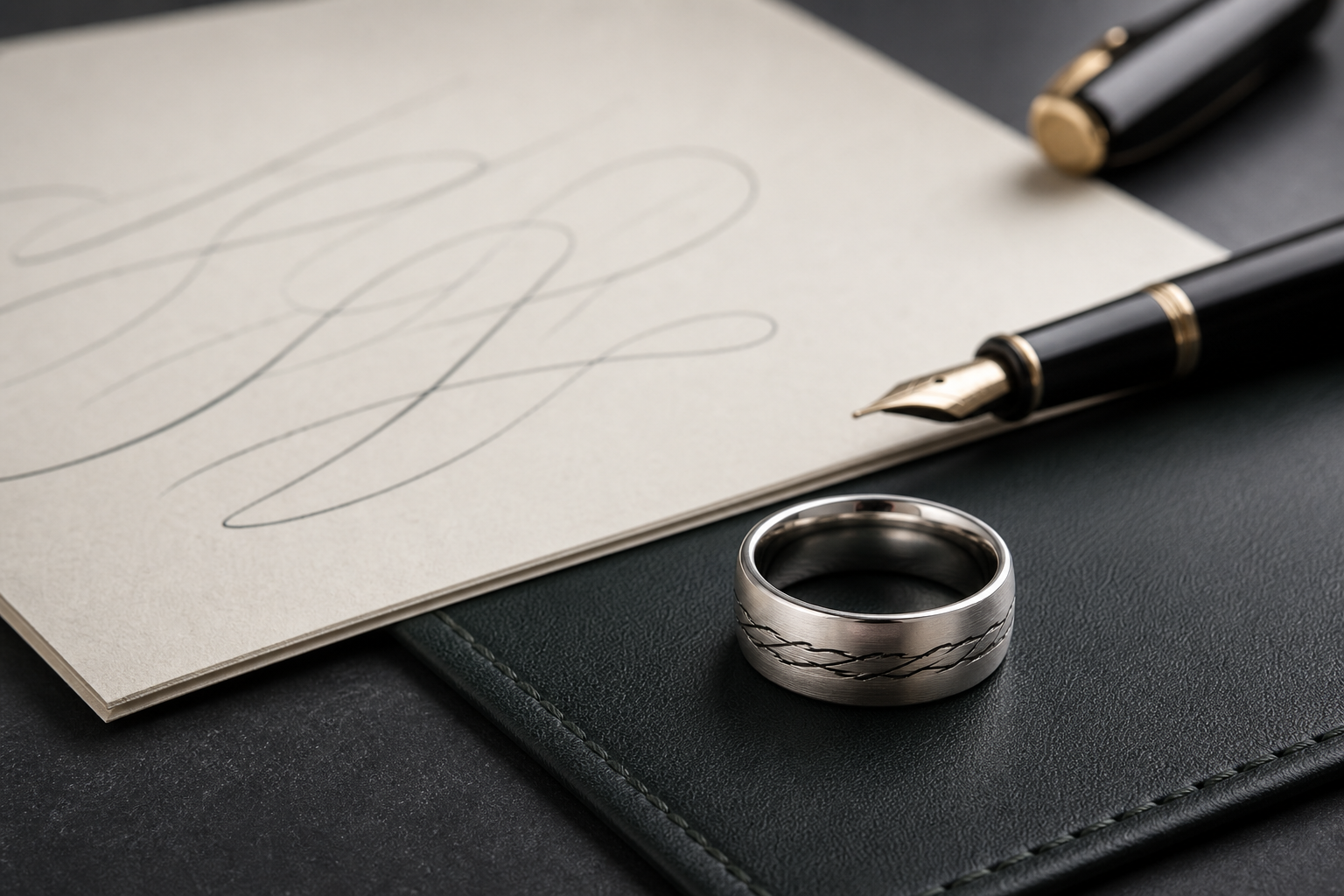
Some people want a visible symbol on the outside: a small angel wing, a tiny flower, a birthstone month, a simple star. Keep whatever symbol is chosen small and gentle. The ring should look like daily jewelry from the outside and carry everything from the inside.
Many parents who have experienced pregnancy loss carry it alongside a subsequent pregnancy or living children, and the ring should feel like it can be worn through all of those seasons. A design that can be explained simply when a child asks about it years later is often more useful than one that requires context to read.
If there have been multiple losses, multiple dates or multiple names inside the band create a kind of private record. Each name deserves to be there. Using the inside of the band for each loss while keeping the outside simple is one way to carry more than one grief without the ring becoming a visible display.
Partners, fathers, and support people grieve pregnancy loss too, and memorial rings for partners are not unusual. Two people who lost the same pregnancy can each carry the same name or date in different band styles without wearing identical rings.
When you are ready — and there is no timeline on ready — bring the name, the dates that matter to you, any hospital print or keepsake file, and one line about the child into the Friends of Irony designer. The first version does not have to be the final one.